Why students should be exposed to STEM education early on?
In an era of rapid technological development, equipping students with critical thinking, creativity, and problem-solving skills is more essential than ever. STEM education is the key to helping the younger generation adapt and thrive in the future. At UTS, STEM is not only an academic component but a comprehensive educational approach that enables students to apply knowledge in real life, nurture a love of learning, and build global citizenship from an early age.
What is STEM Education?
STEM education is an integrated teaching philosophy that combines four disciplines: Science, Technology, Engineering, and Mathematics. This multidisciplinary approach equips students with practical knowledge and skills, in contrast to traditional academic teaching methods. STEM encourages students to apply interdisciplinary knowledge to solve real-world problems and situations.
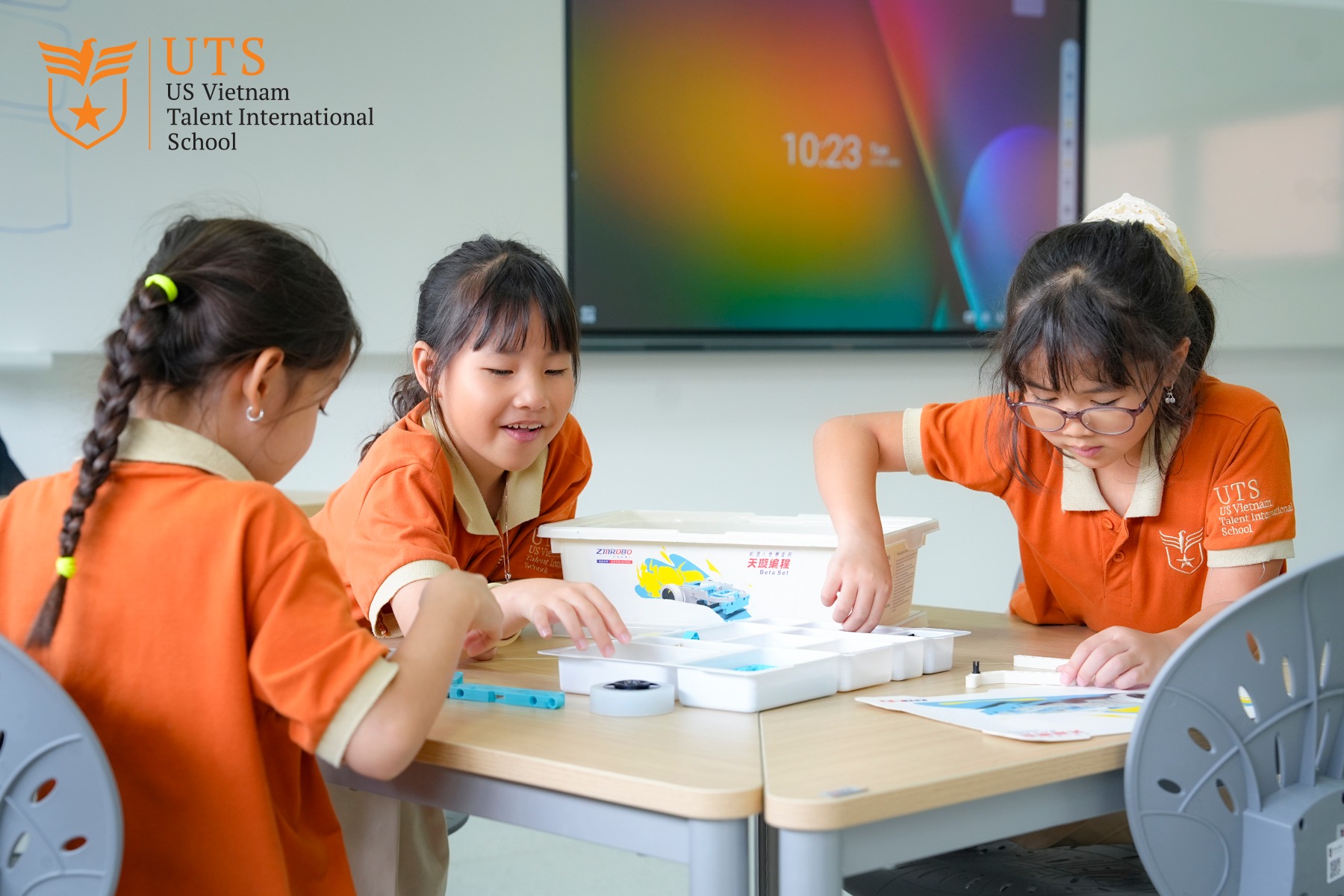
STEM connects theoretical knowledge with real-life application
Why is STEM education important for your child’s future?
In a world constantly transformed by technology, STEM education has become a foundational element to help children adapt and develop. Early exposure to STEM not only helps them understand the connection between academic knowledge and daily life but also prepares them with a strong foundation for entering future career paths.
Below are the key benefits STEM education offers students in the 21st century:
Developing practical problem-solving skills
STEM goes beyond abstract concepts by focusing on real-life application. Students are encouraged to analyze situations, ask questions, experiment, and find solutions—critical thinking skills that help them proactively and flexibly respond to various challenges.
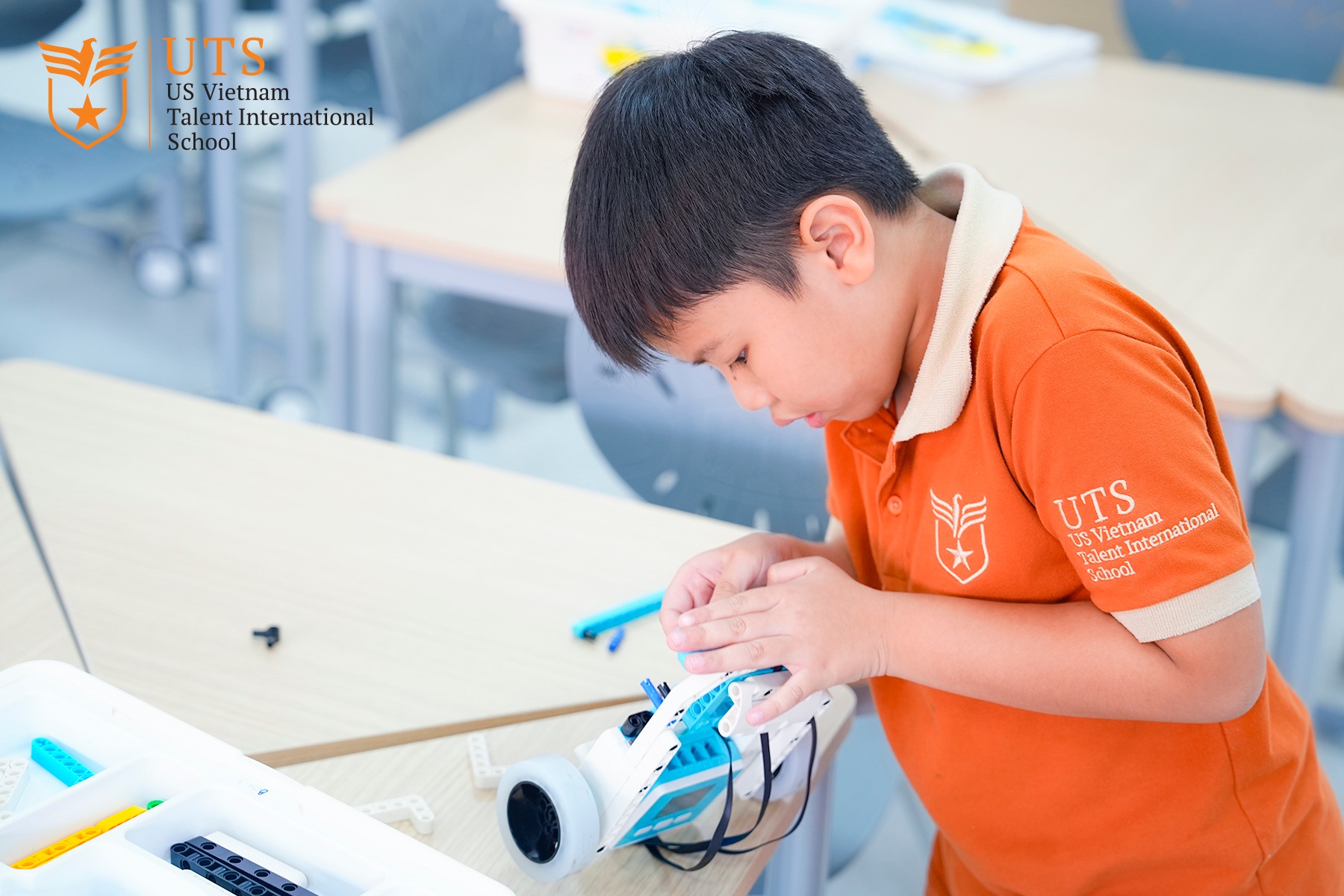
Students practice analyzing situations and seeking solutions
Fostering unlimited creativity
STEM education empowers students with multidimensional thinking by encouraging them to approach problems from different perspectives. Instead of learning theory alone, students participate in hands-on activities such as model design, robotics programming, and scientific projects. These experiences enhance critical thinking, imagination, and creativity, which is essential for thriving in a technology-driven era.
Each STEM project is a chance for students to explore and express unique ideas.
Building a strong foundation for future careers
In the digital age, careers related to technology, data, and engineering will continue to grow rapidly. STEM equips students with scientific thinking and digital skills from an early age, opening doors to high-potential fields such as artificial intelligence, biotechnology, renewable energy, and space exploration.
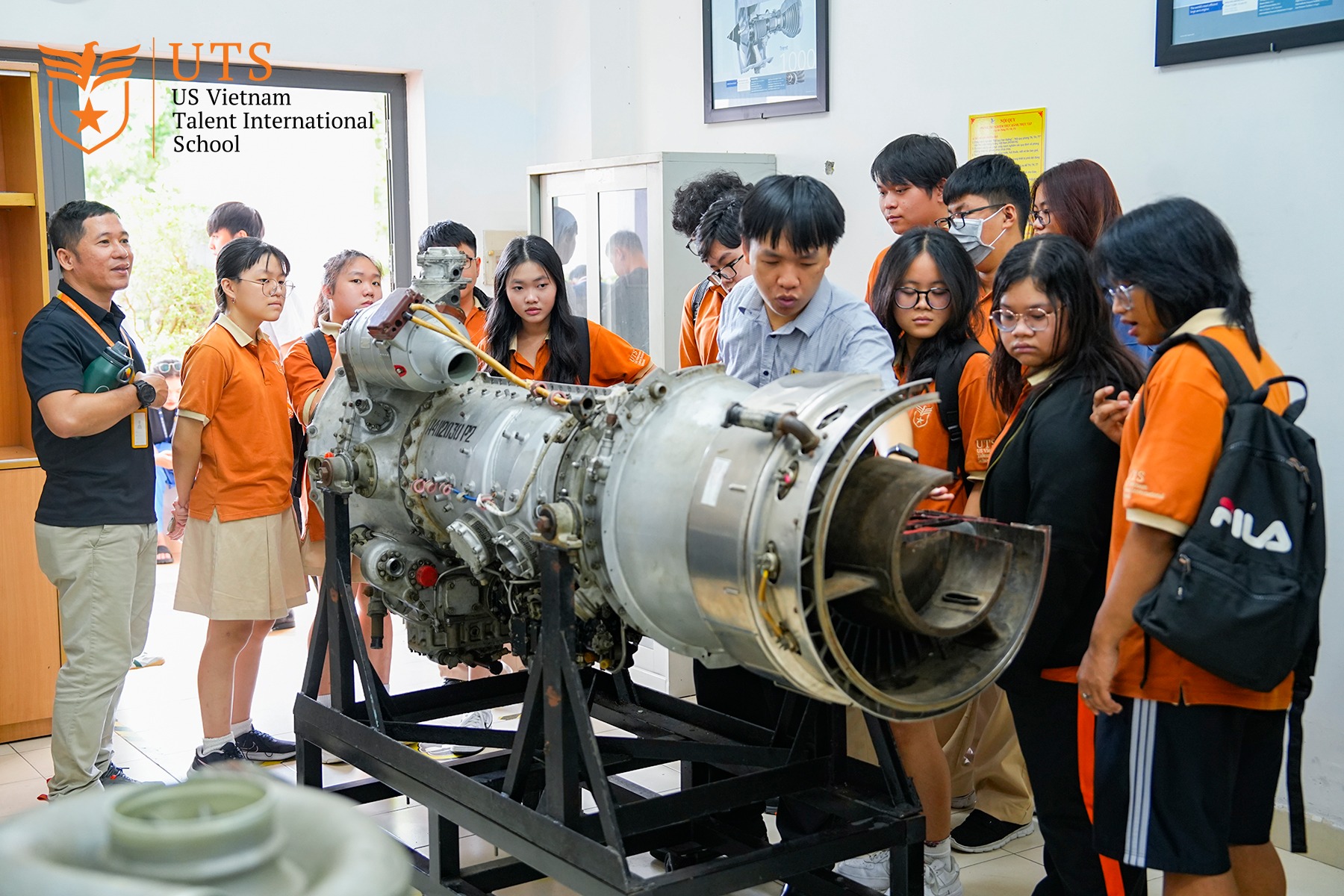
STEM education opens pathways to pioneering industries of the future
Enhancing teamwork and effective communication
Collaboration and coordination among team members are essential for project success. STEM learning often involves group work, where students explore, discuss, and solve problems together. This cooperative process strengthens listening, idea-sharing, and task delegation—naturally cultivating teamwork and communication skills vital for both academic and professional environments.
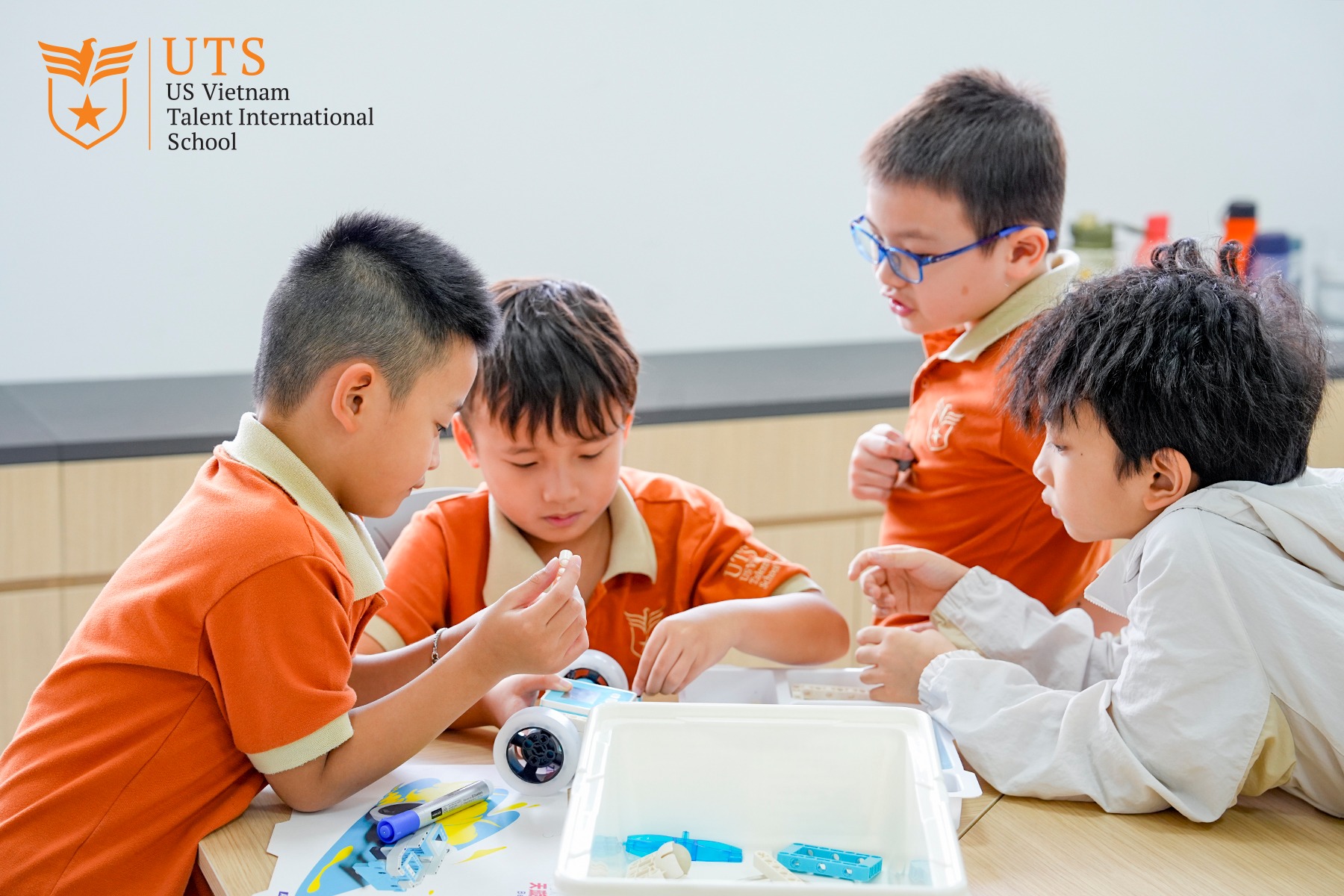
Working in teams teaches students how to listen and share ideas effectively
What makes STEM education at UTS unique?
Recognizing the significance of STEM education, the US Vietnam Talent International School (UTS) actively integrates this approach into the core curriculum. At UTS, students learn in an environment that is both creative and practical, allowing them to develop applicable skills and knowledge as a strong foundation for becoming global citizens.
Teaching and Learning Approaches at UTS
UTS adopts a competency-based approach that emphasizes real-world learning and experiential engagement. Activities are designed to help students take initiative in exploring knowledge, develop critical thinking, problem-solving abilities, and personal creativity. Through interdisciplinary projects, students not only acquire knowledge flexibly but also foster curiosity, a passion for discovery, and a lifelong learning mindset.
Students learn to collaborate, innovate, and apply knowledge in real-life contexts.
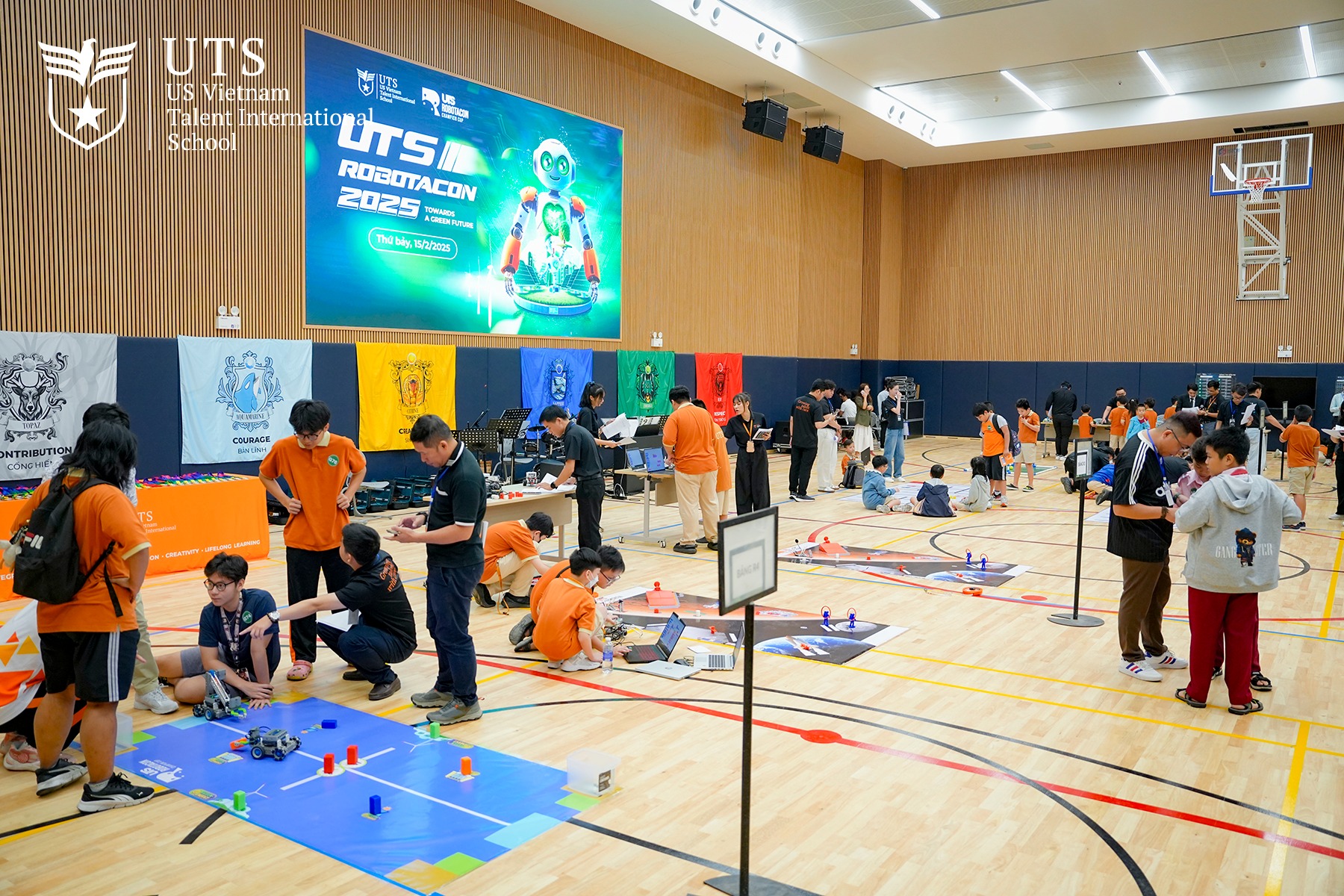
Alongside the curriculum, the school offers various extracurricular clubs such as Robotics and ICT to expand learning beyond the classroom. UTS also encourages students to participate in city-wide STEM competitions, providing more real-world experiences and enhancing applied skills in competitive environments.
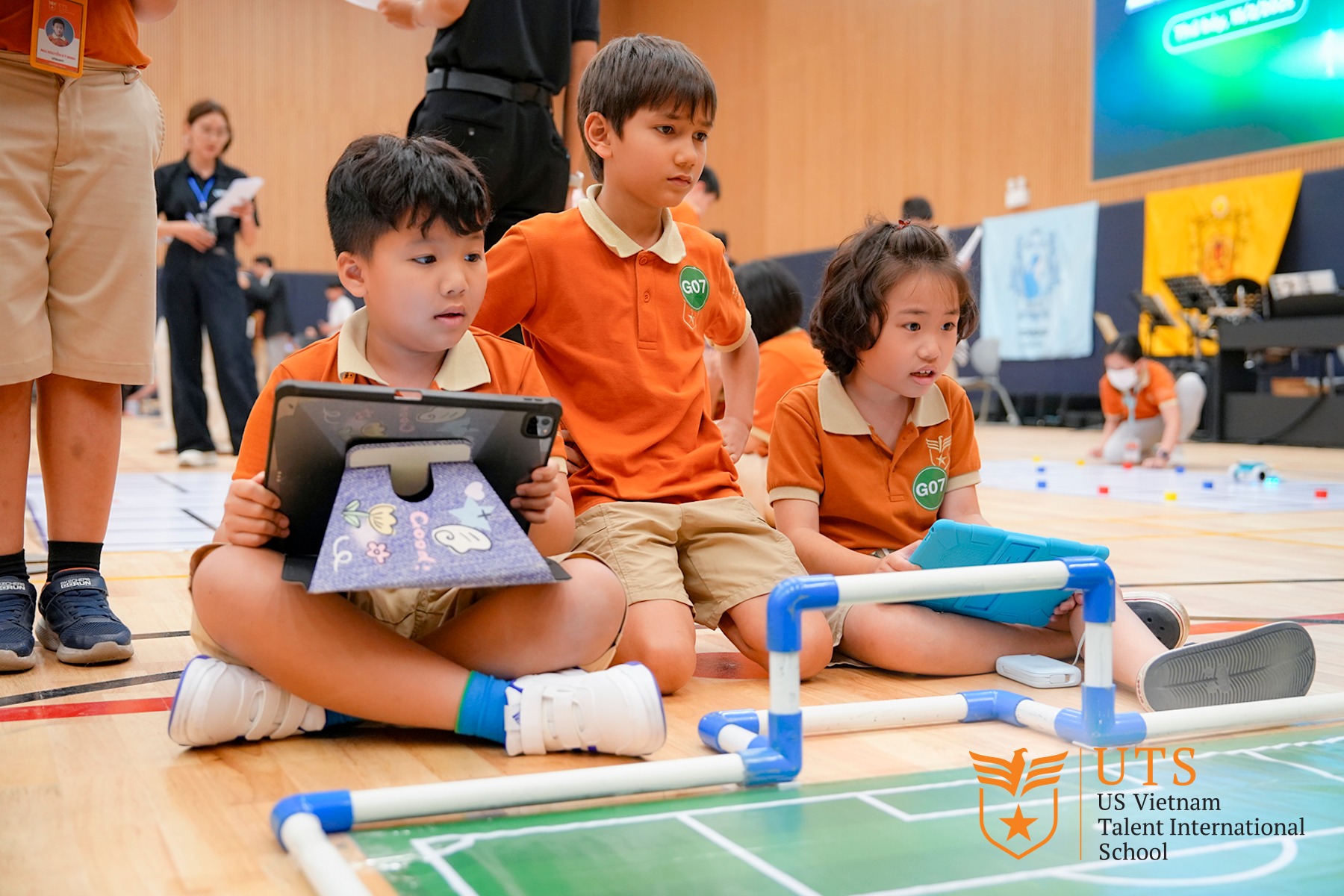
UTS empowers students to grow holistically both in and out of the classroom
Modern facilities
To create the best learning conditions, UTS prioritizes investment in facilities, equipping all functional classrooms with modern tools and ensuring convenience for every subject. The school also integrates advanced technology into teaching, enabling students to become familiar with tech applications from an early age.
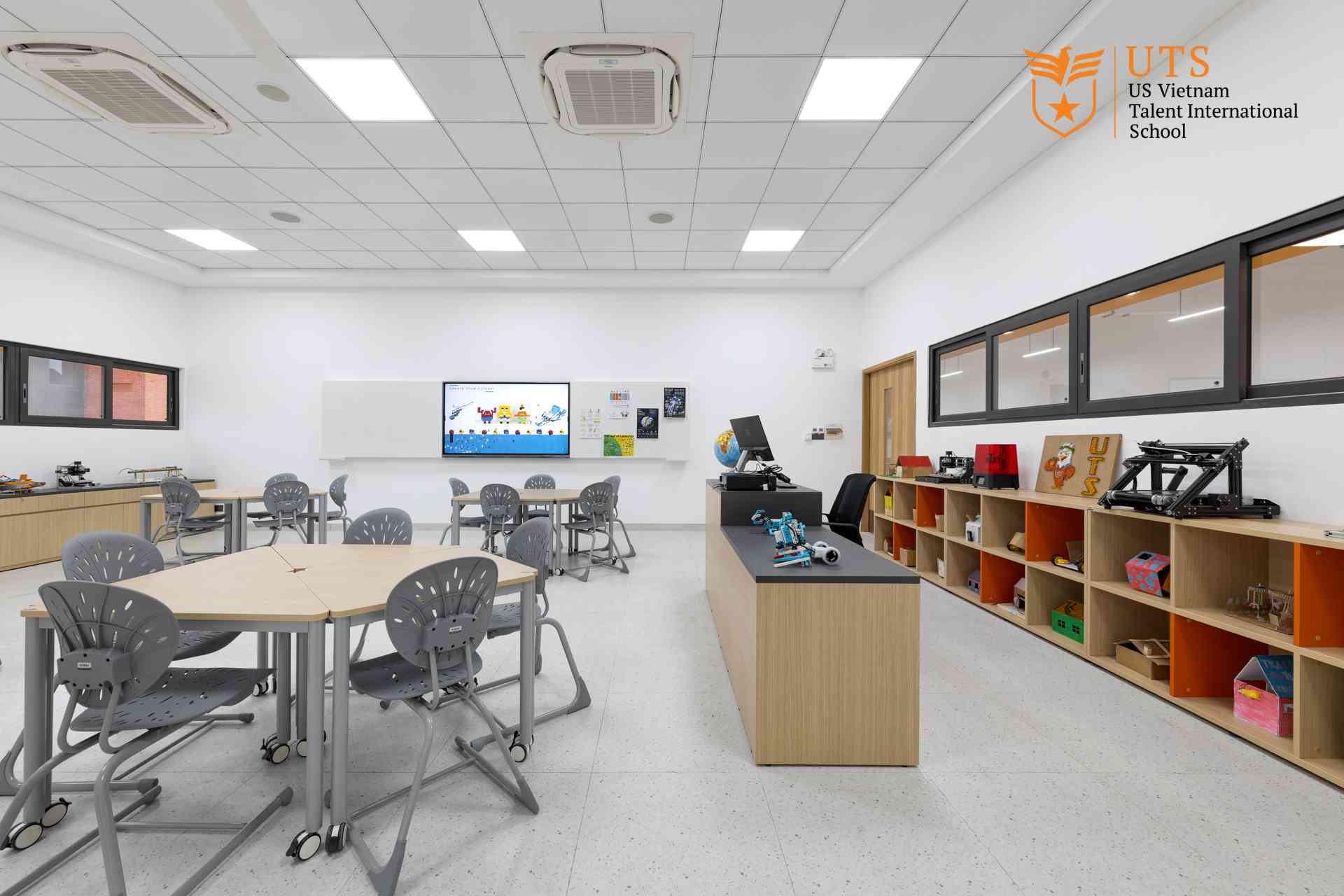
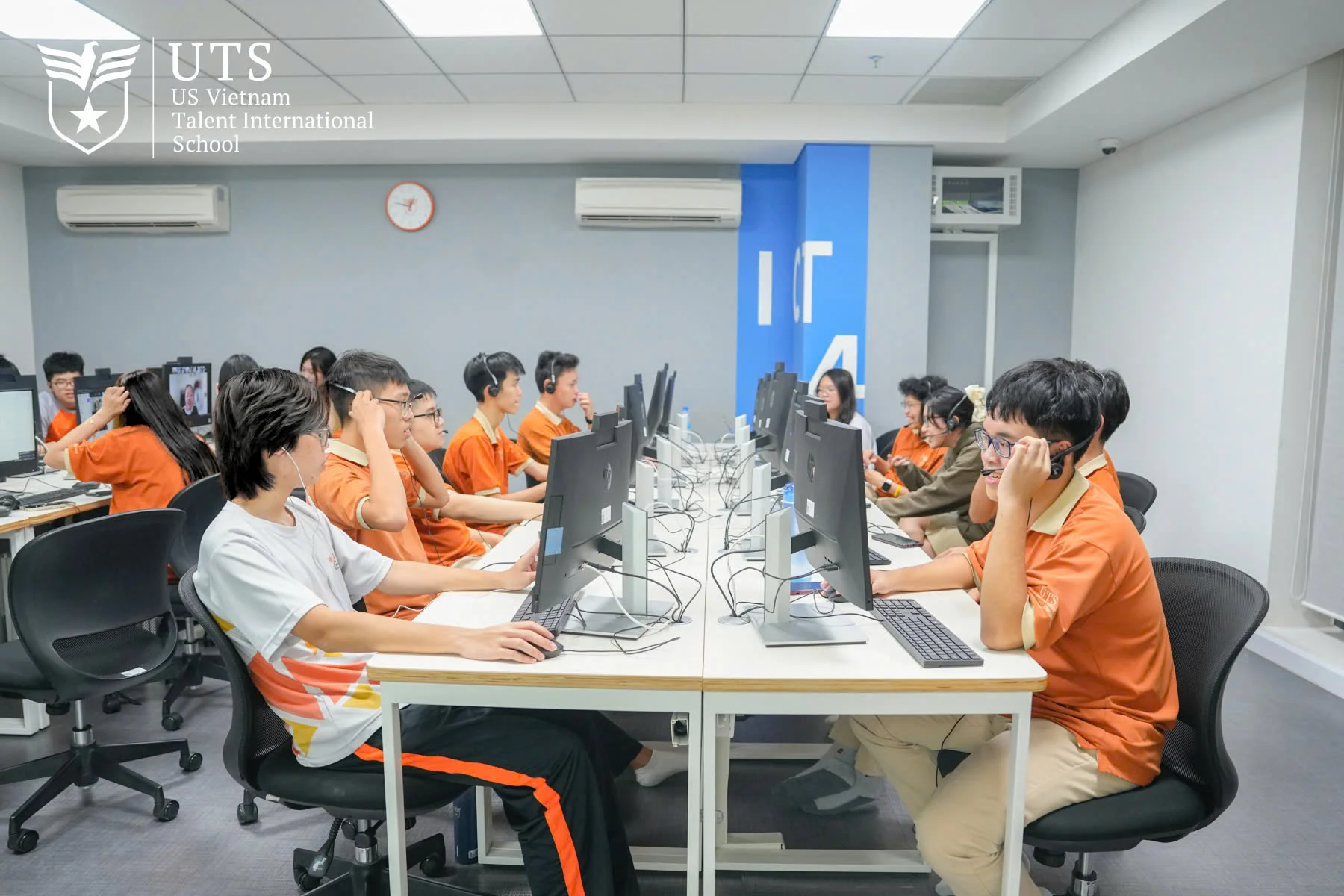
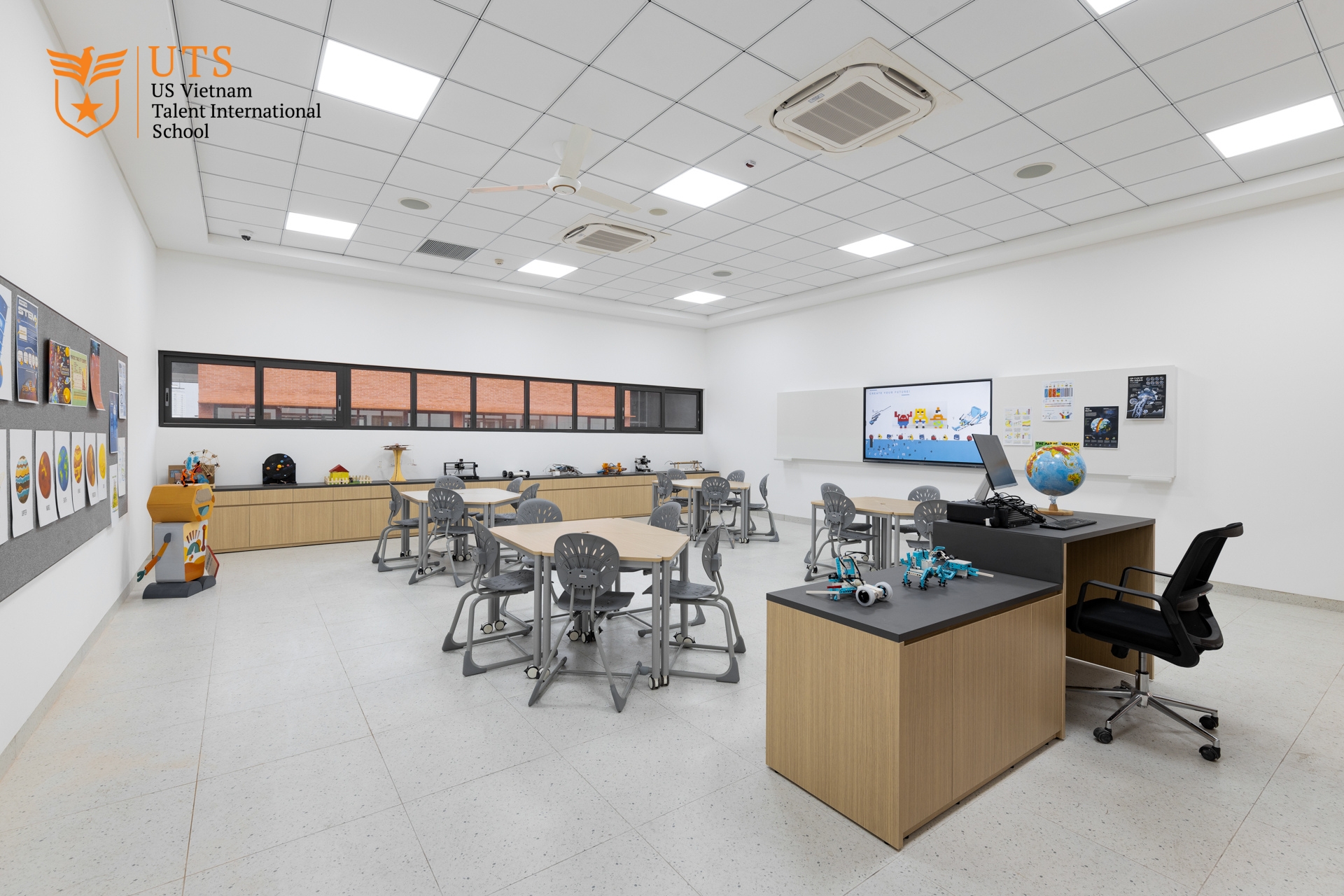
Functional classrooms at UTS are fully equipped with modern facilities
Highly qualified and experienced faculty
At UTS, teachers play a vital role in delivering effective STEM education. The faculty continuously updates teaching methods and flexibly designs activities to match each student’s abilities and interests.
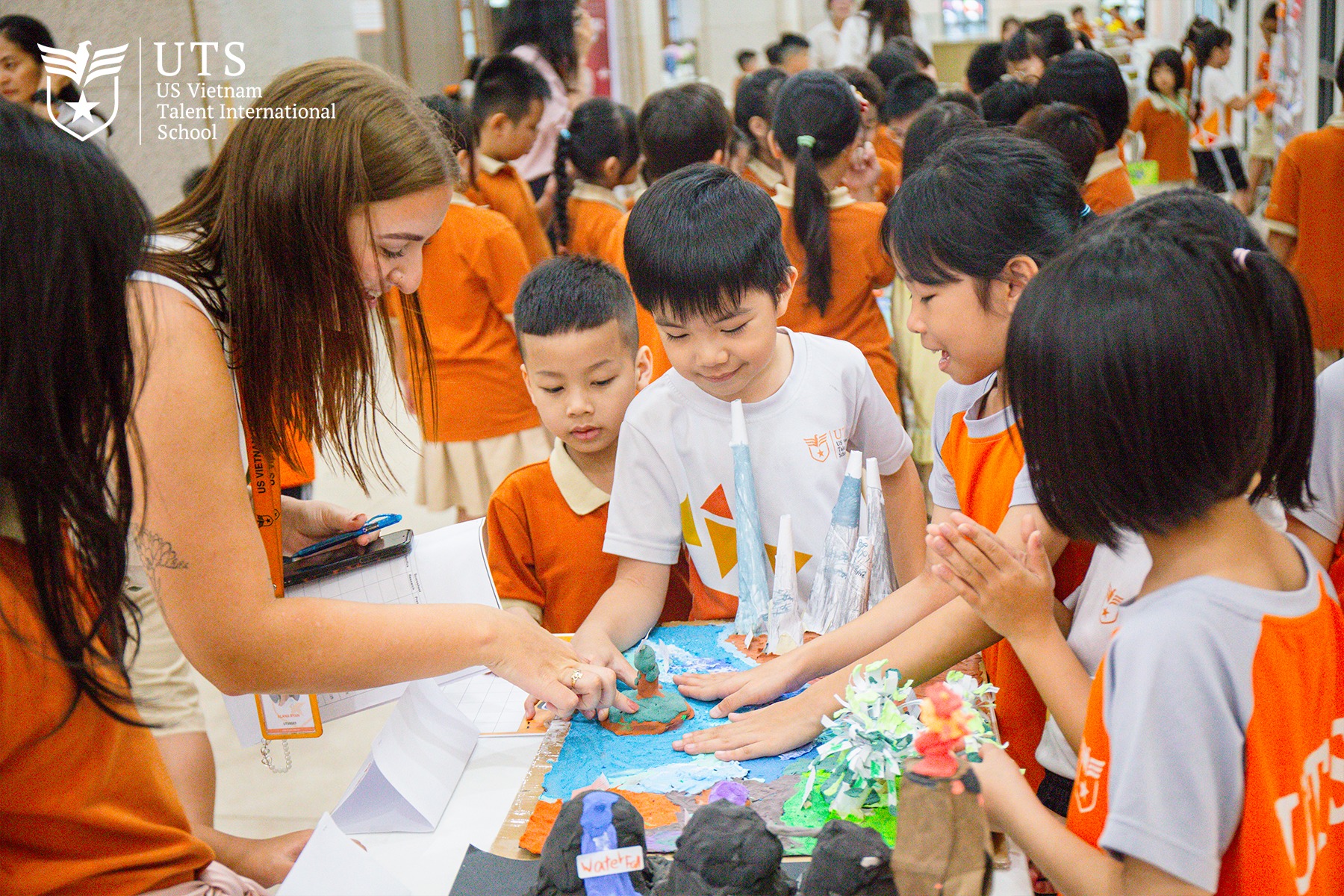
UTS teachers accompany students through each project, providing guidance and encouragement
Highlighted projects
Project: “Automation for the Environment”
As part of an interdisciplinary STEM–Science project, Secondary UTS-ers collaborated over four weeks to design AI-powered models that contribute positively to the environment. Outstanding projects presented at the showcase included: automatic vacuum cleaners, automated watering systems, air pollution warning devices, and smart trash bins.
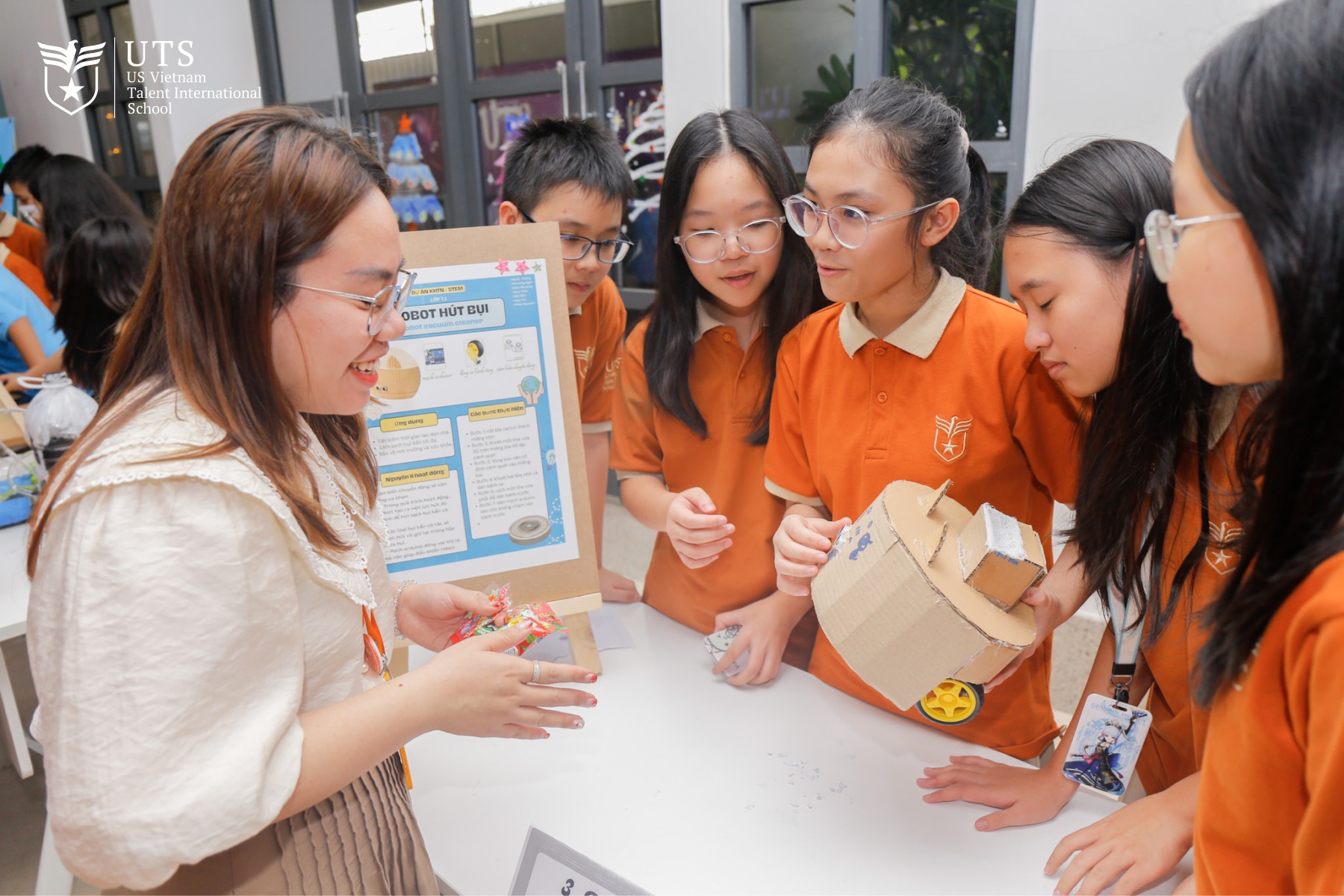
Project: “Automation for the Environment”
Through this project, students developed skills in research, model design, programming, and teamwork toward a shared goal—all aligned with the competencies required in the 21st century and the mission of nurturing global citizens.
Project: “Wave Breaker Engineering”
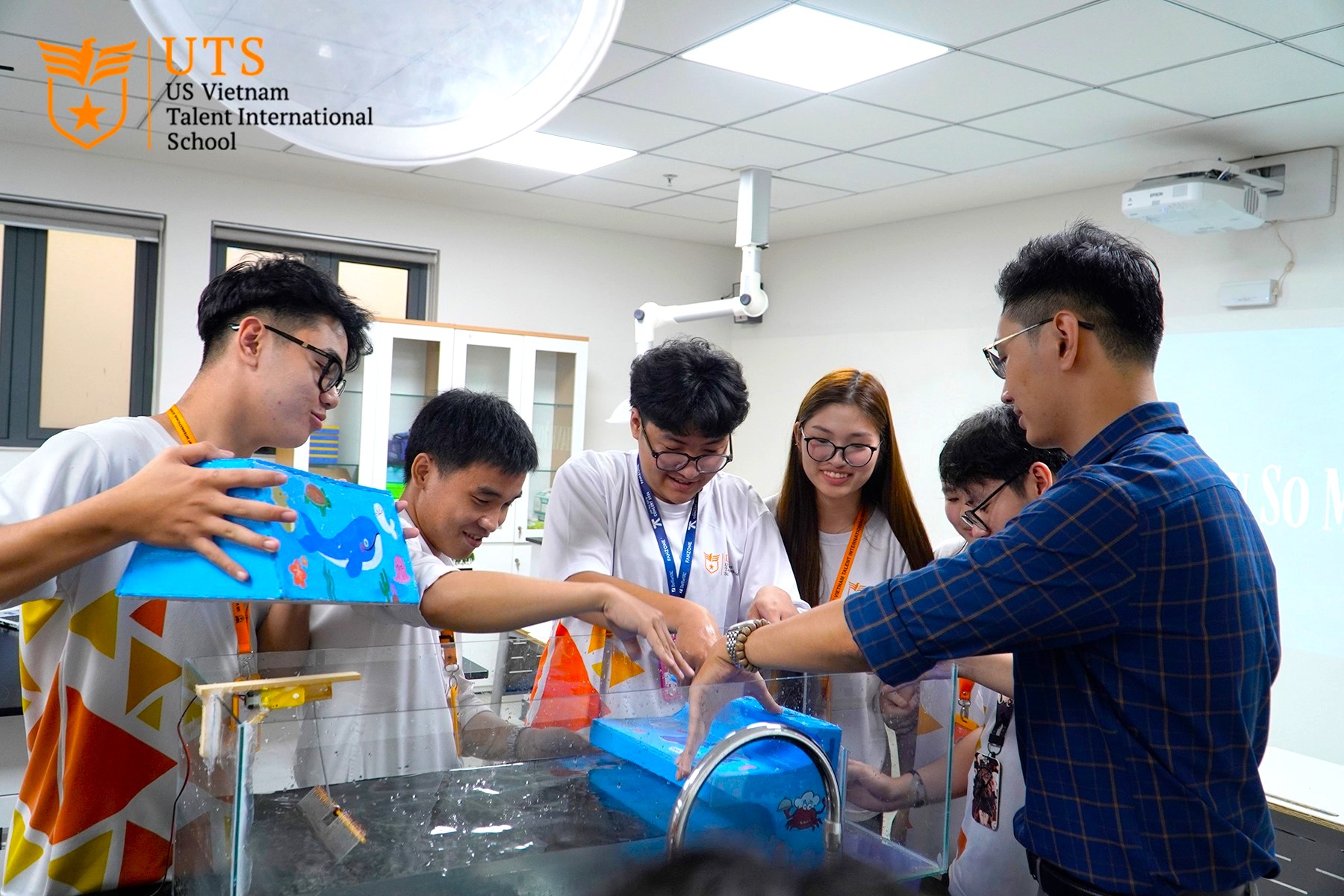
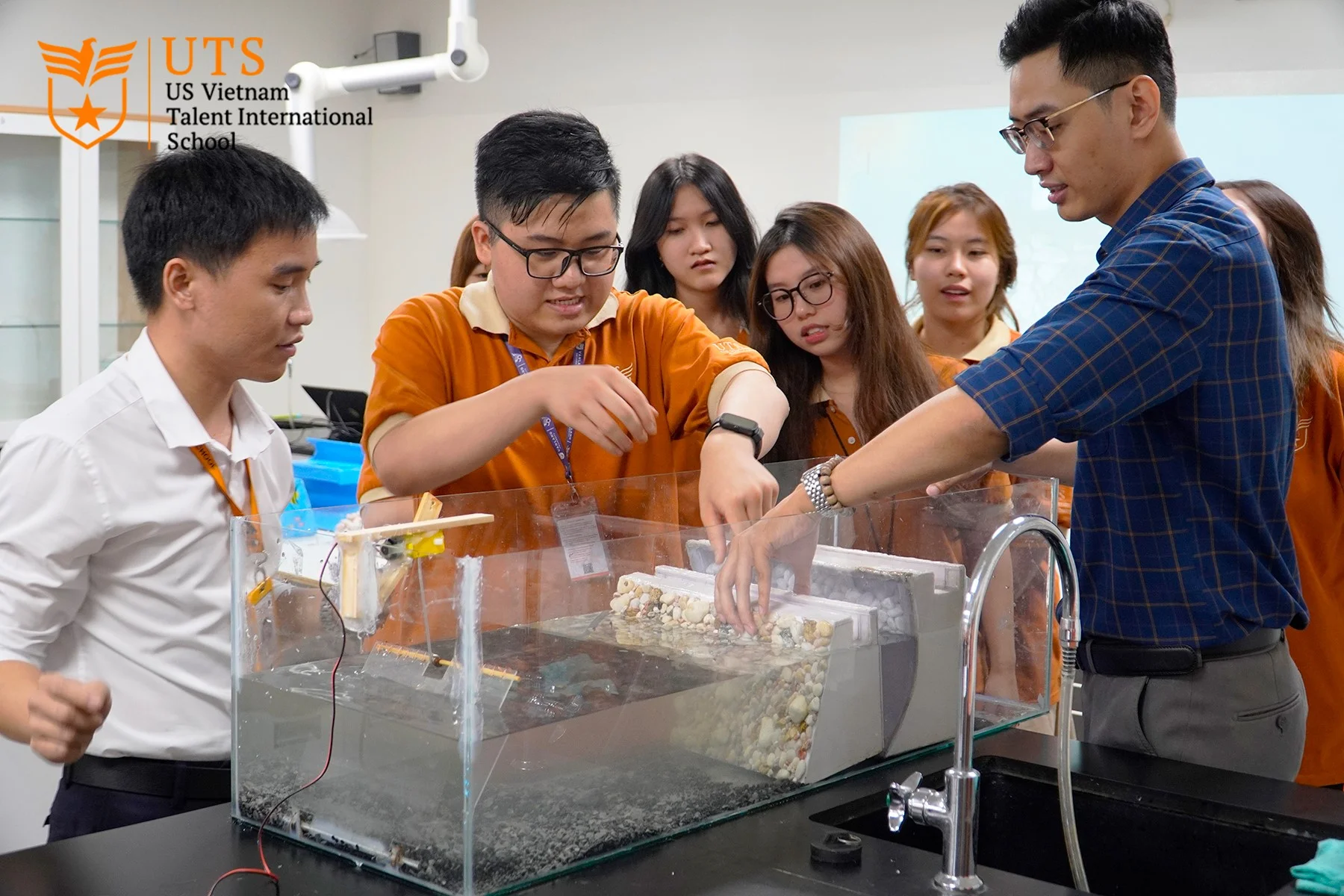
In February, Grade 11 students joined the interdisciplinary “Wave Breaker” project – a STEM-integrated learning activity that challenged students’ creativity and real-world problem-solving skills.
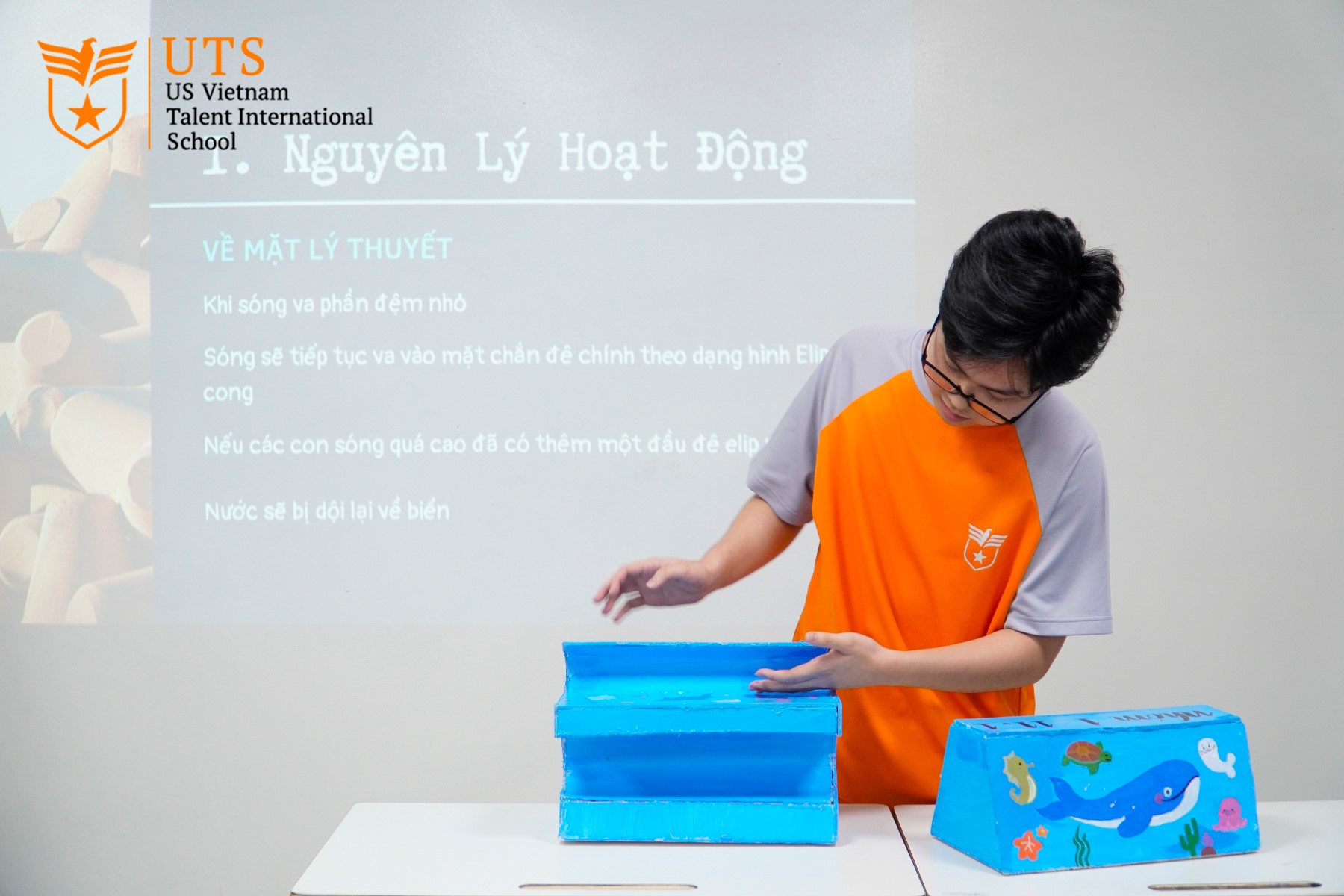
Project: “Wave Breaker Engineering”
By researching and building wave breaker models, students applied knowledge flexibly from theory to practice. This is a clear example of the project-based learning approach UTS champions, helping students gain deep understanding, enhance applied skills, and deliver meaningful contributions to society.
UTS Science Fair
At this year’s UTS Science Fair, Primary students showcased innovative science models developed through the Common Core and Oxford International Curriculum (OIC). Projects such as the Solar System, chain reactions, earthquake-proof houses, crystals, and the circulatory system demonstrated how students apply academic knowledge in practice. They also cultivated creativity, problem-solving skills, teamwork, and confident presentation.
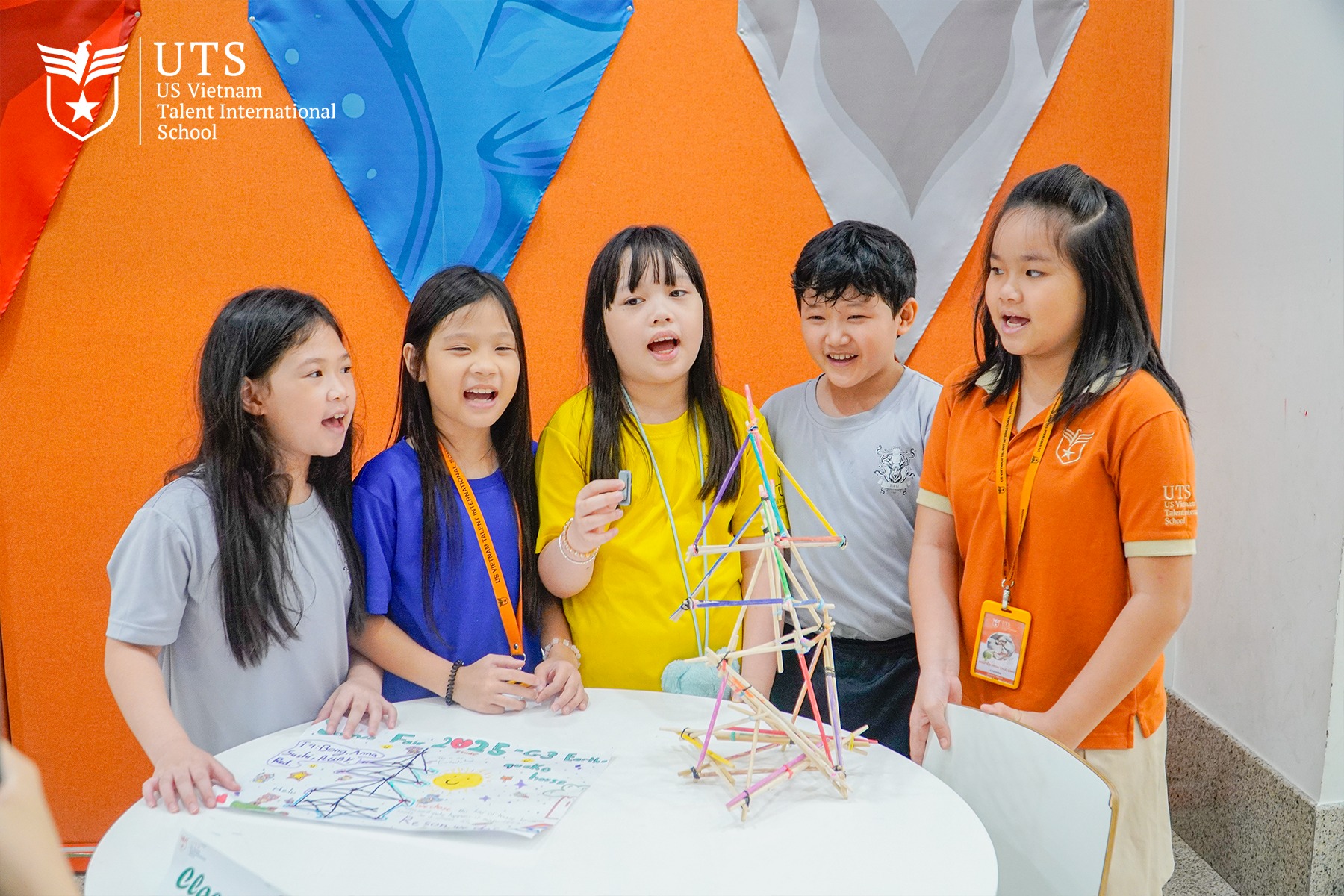
Science Fair provides a hands-on playground for students to explore and apply science in real life
Frequently Asked Questions (FAQ) about STEM education
At what age is STEM education appropriate?
STEM education is suitable for all age groups, from early childhood to high school and even higher education. However, its content and teaching methods should be tailored to each developmental stage.
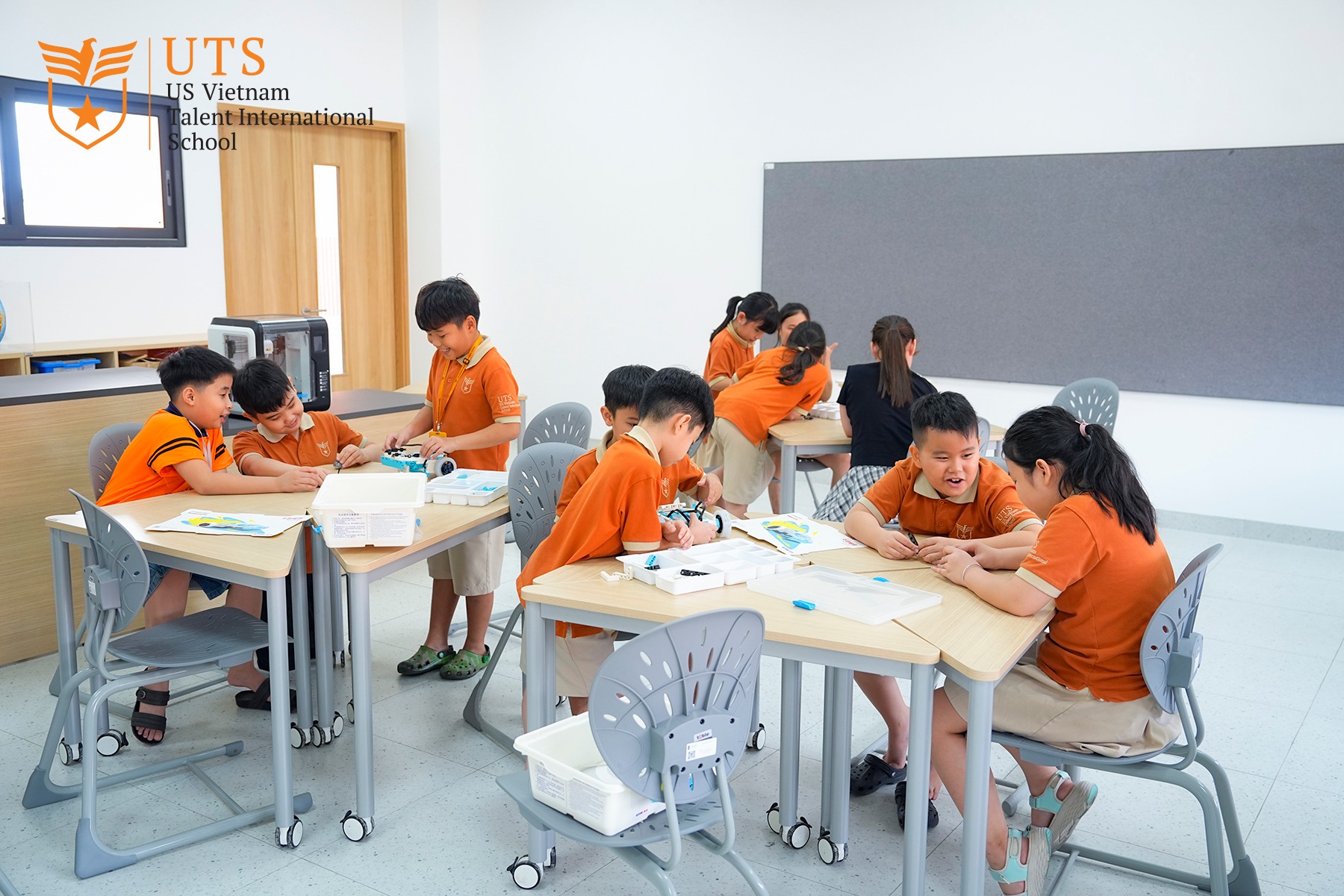
STEM programs are designed with flexibility to fit every learning level.
What is the difference between STEM and STEAM?
Below is a short comparison that highlights the difference between the two modern educational models.
| Criteria | STEM | STEAM |
| Definition | An integrated education model combining Science, Technology, Engineering, and Mathematics | An expanded STEM model that incorporates Art into the curriculum |
| Main objective | Focuses on developing logical thinking, problem-solving skills, and technological competence | Combines logical reasoning with creative thinking, nurturing emotional intelligence and aesthetic appreciation |
| Suitable learners | Best suited for students inclined toward science, technology, and engineering | Ideal for students who enjoy both science and the arts |
Do students need to be strong in science to study STEM?
STEM education emphasizes more than just academic knowledge—it values critical thinking, creativity, and real-world application. Students can contribute their strengths through teamwork, idea generation, model design, or tech application. The most important factors are curiosity, initiative, and a love of learning.
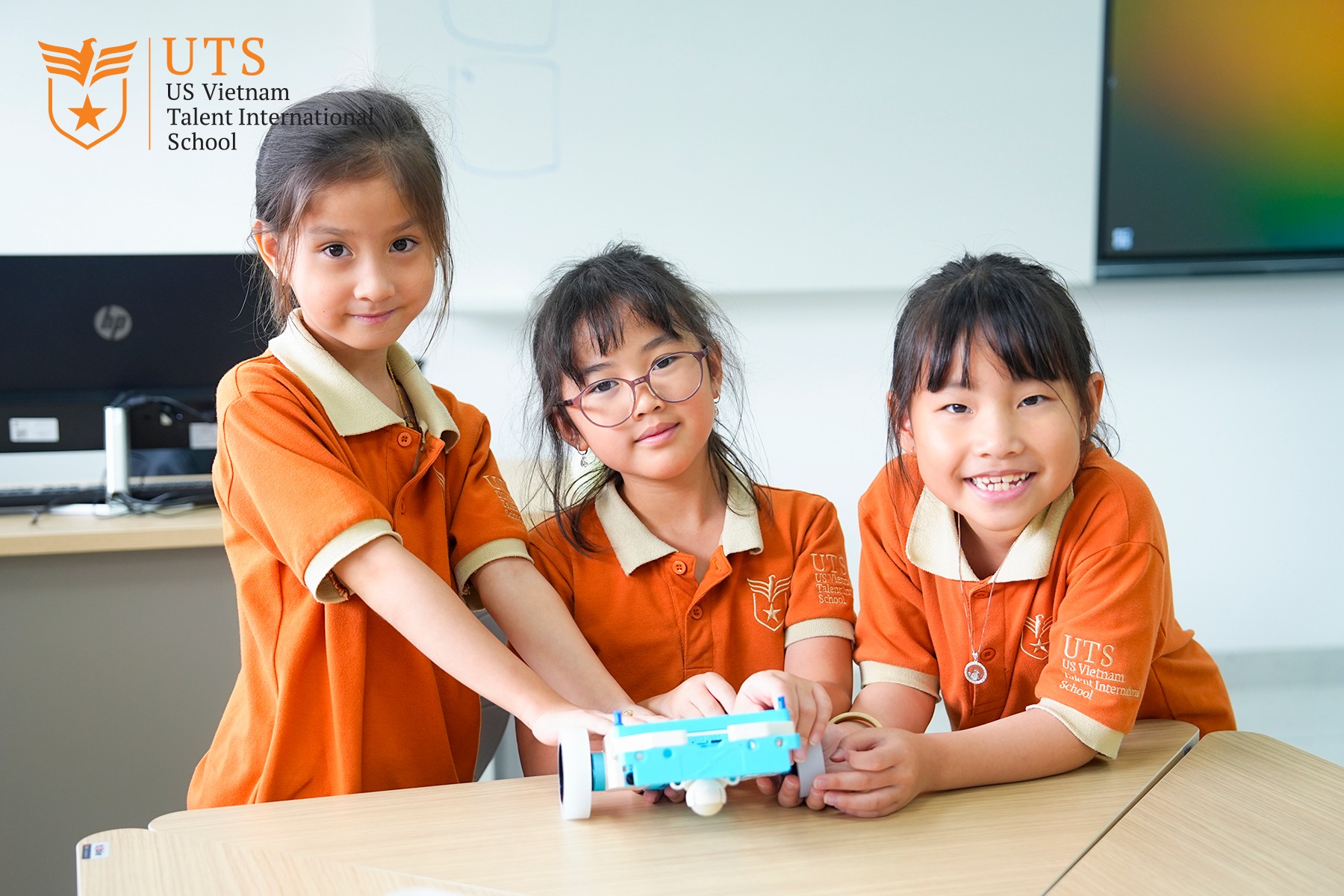
STEM encourages active exploration and discovery in every learner.
Studying STEM at UTS – A launchpad for global citizens
UTS is committed to creating impactful learning experiences and inspiring students from within. Through STEM education, the school not only nurtures a love for lifelong learning but also equips students with the capacity to make positive contributions to the community and beyond.
If you’re looking for a high-quality educational environment that focuses on holistic thinking and skills development through STEM programs, UTS is a worthy choice.
To learn more or receive personalized consultation, please visit HERE or call 028 710 78887.
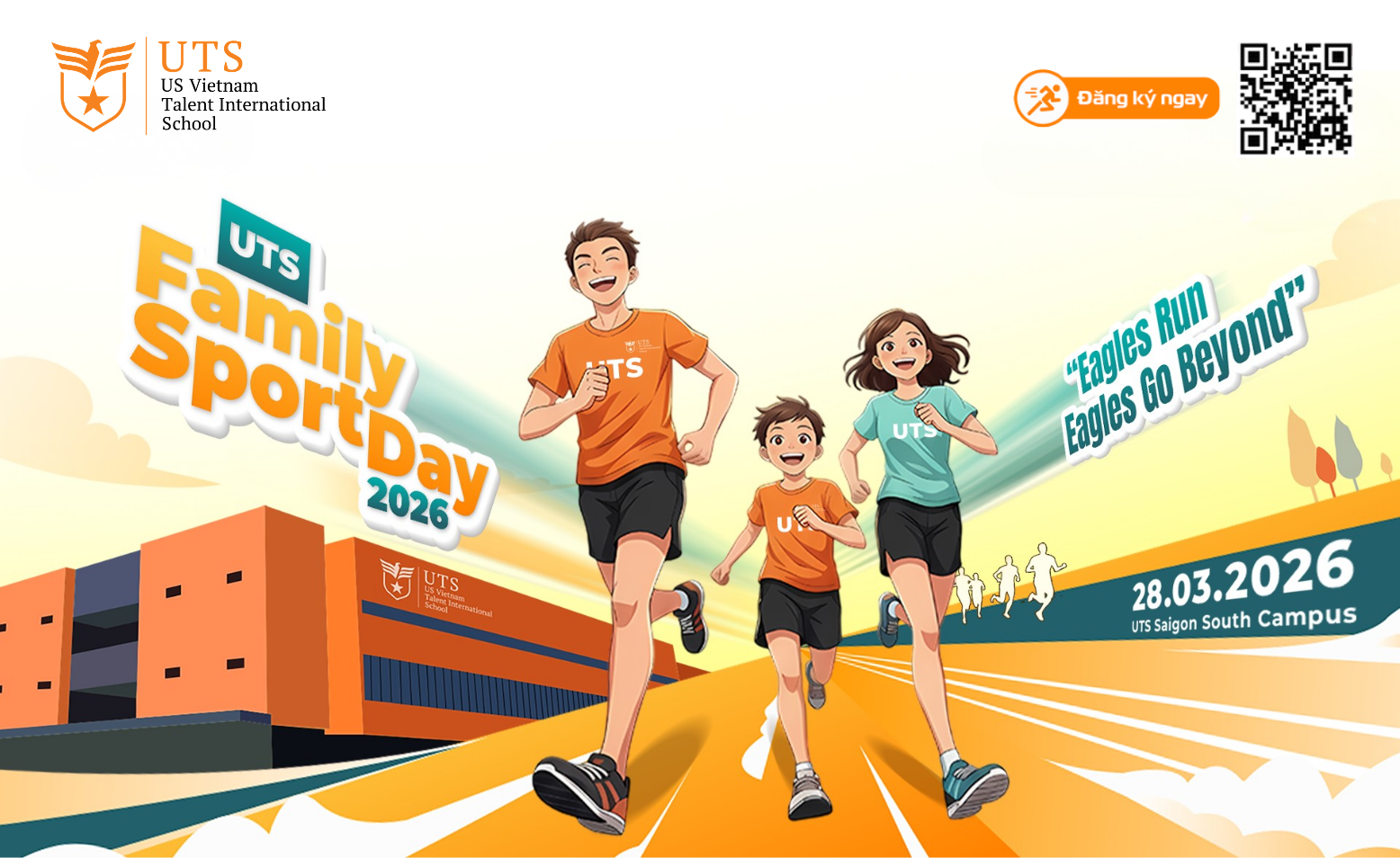
UTS Family Sport Day 2026 “Eagles Run, Eagles Go Beyond” officially returns
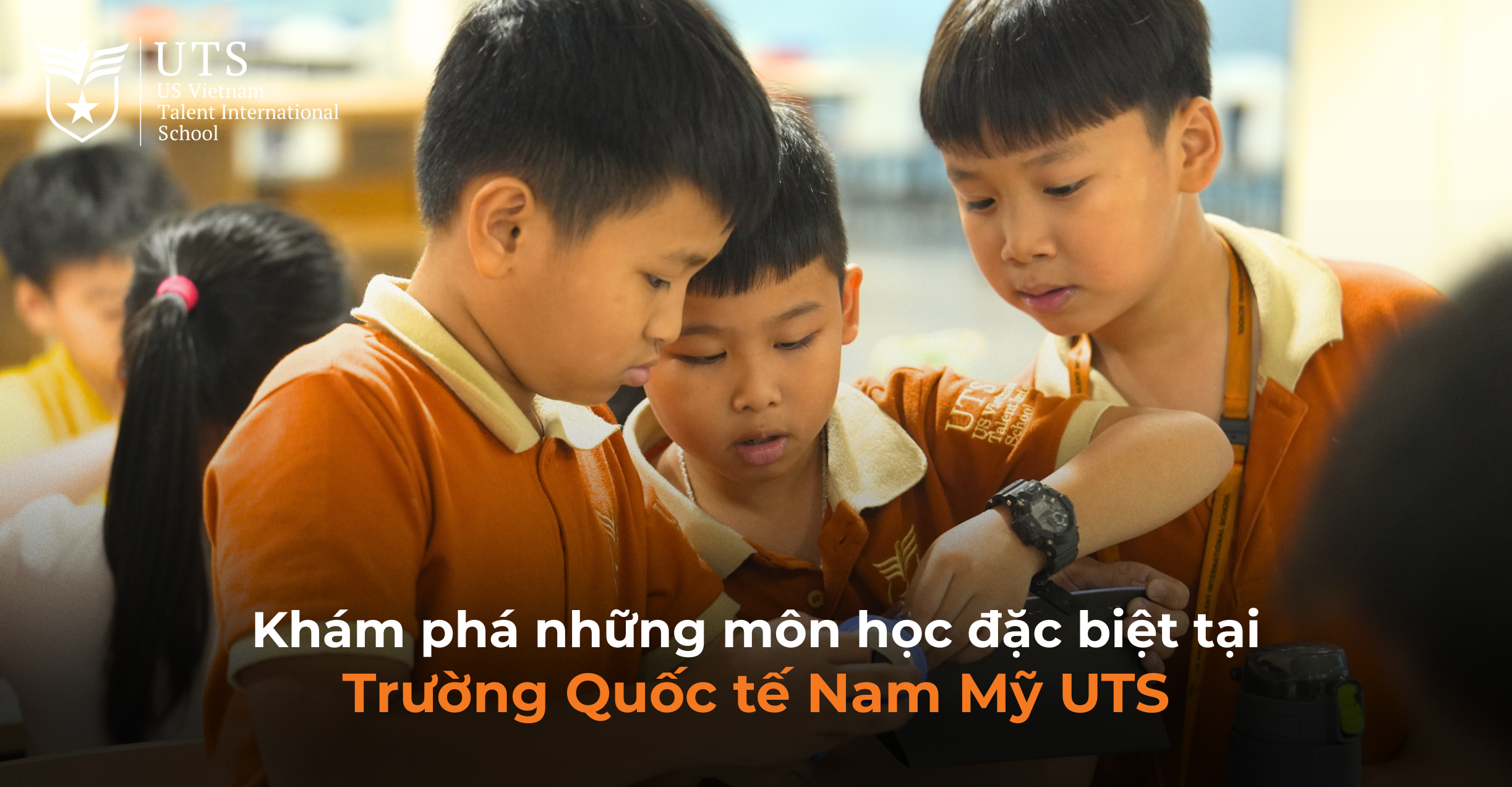
Khám phá những môn học đặc biệt tại Trường Quốc tế Nam Mỹ UTS và lợi ích vượt trội cho học sinh
Vietnam’s Mark – A journey of heart and pride in the nation
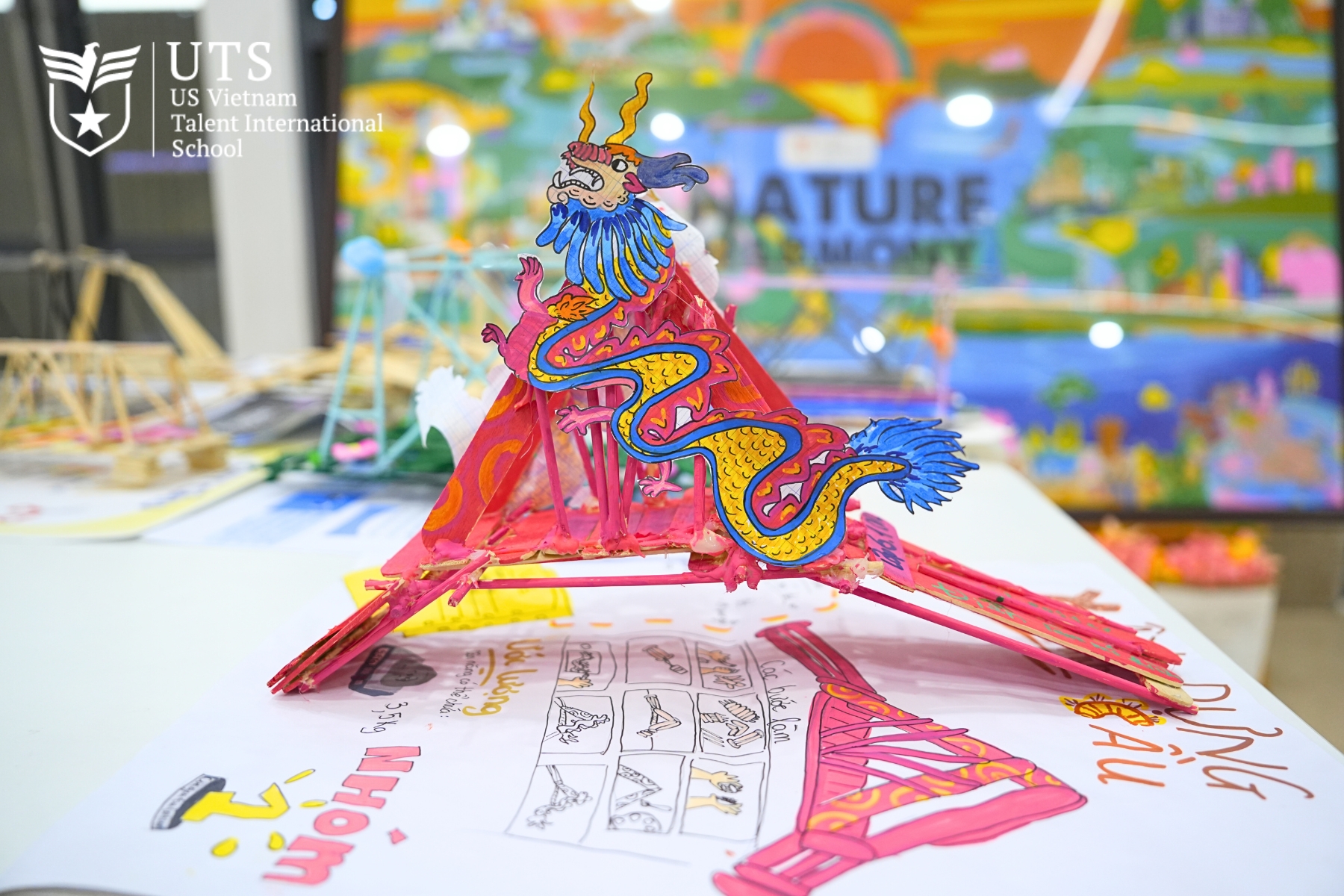
Project “Talented Bridge-Building Architect” at UTS