
“Hands-on” methodology – Excite creativity and help children enjoy learning

“HANDS-ON” METHODOLOGY- EXCITE CREATIVITY AND HELP CHILDREN ENJOY LEARNING.

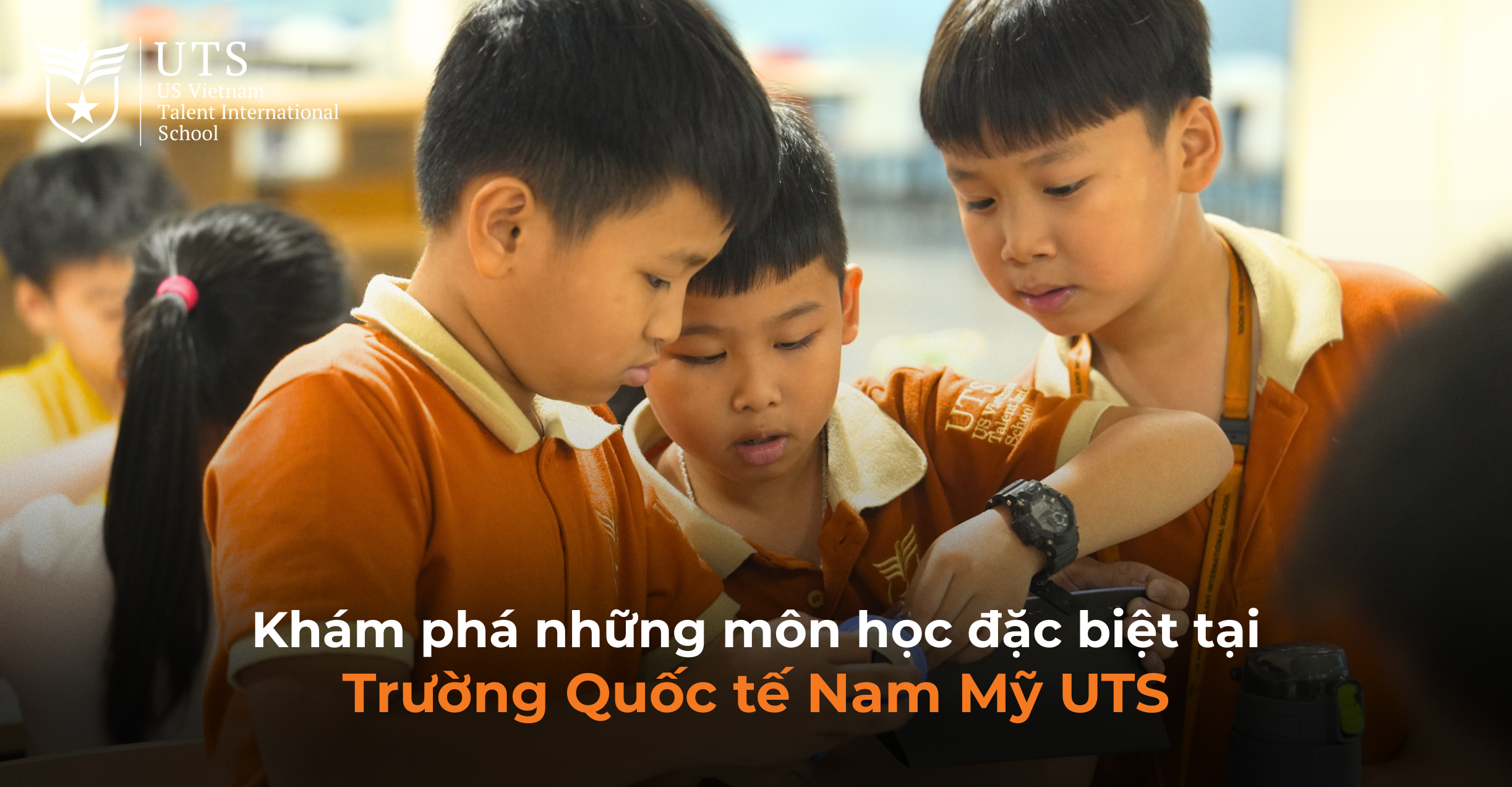
In recent years, the education sector in general and schools have made great efforts to reform the quality of teaching and learning in the natural sciences. With the teaching philosophy of putting Students at the Center”, the US Vietnam Talent International School has applied the method “Hands-on” at the high school level to help students be independent, creative, take initativesinitiatives and solve problems. Besides, this method also helps teachers improve the quality of teaching. 

“Hands-on” methodology is the way the teacher organizes for students to self-study to find solutions to the knowledge in the curriculum through proposing, discussing, and performing experiments. 

The steps to organizing classes according to this method include: 

Stage 1: The starting situation and the question raises the issue. 

Teachers will proactively set a starting or questionable situation as a starting point to the lesson. The foreboding circumstances are brief, close to students and practice making questions raises the issue at the same time. 

Problem question which is the big question of the lesson itself (or module of knowledges that students will be taught) need to ensure suitable to students’ level, arouse curiosity and researching interest of the students to equip them with studious psych sphere before perceiving sciolism. 

Teachers should use open questions instead of closed ones (Yes-No question) in terms of problem questions. It also must meet all the requirements that were mentioned before, so that the teaching scheme of the teachers will be more successful. 


Stage 2: Expressing the beginning opinions of students  

In this stage, teachers will encourage the students to express thoughts and raise their awareness before learning new things. To raise the starting conception from the students, teachers can request their students to remind the previous lessons that alike with knowledge of the current lesson. When requesting students to express the started awareness, students can be required using various expression forms such as verbal (through personal states), by writing or drawing to express thoughts. 

From all the started original opinions from the students, teachers must be skillful in helping students to ask questions. Furthermore, teachers must focus on the conception interdepended with the lesson content. 


Stage 3: Offering questions or hypothesis and design experimental plans 

From the proposed previous questions, teachers ask some questions, students are propounded to express their hypothesis and design experimental plans, full-searching plans to verify all their theories and find the answers. The full-searching plans that mentioned before are options to find out the answers, such as introspecting, doing experiments 


Depending on the knowledge or problem posed, students can propose different research-experiment options. In the process of proposing the experimental plan, if the student’s opinion is correct but the language is not standard or the expression is not clear, the teacher should suggest and help students step-by-step improve the expression. This method encourages students to self-assess each other’s ideas rather than the teacher’s. 

Step 4: Carry out research-experimentation 

From the experimental research, investigation, and research options raised by students, the teacher skillfully comments on and chooses appropriate experimental equipment or teaching equipment. suitable for students to conduct research. If experiments must be performed, it is preferable to perform experiments directly on real objects. In some cases where it is not possible to conduct experiments on real objects, they can be done on models or for students to observe drawings. 

For the observation method, teachers let students observe real objects first, then let them observe scientific drawings or models to enlarge features that cannot be clearly observed on real objects. When conducting an experiment, the teacher clearly states the requirements and purpose of the experiment or asks the students to indicate the purpose of the experiment to be conducted. 

Experiments are conducted in turns, corresponding to each knowledge module. After each experiment is done, the teacher should pause for the students to draw conclusions (i.e., find the answers to the corresponding problems). The teacher reminds students to record experimental materials, the layout and implementation of the experiment (describe it in words or draw a diagram), note down the results of the experiment, and the conclusion after the experiment in the actual notebook. 

For complex experiments, and if possible, teachers should design a ready-made template for students to fill in with experimental results and experimental materials. When performing individual or group independent practice, it helps students avoid seeing and doing things in each other’s way, being passive in thinking, and it also makes it easier for teachers to detect groups or individuals who excel in performing experiments. Research experiments, especially experiments performed with the same experimental equipment and materials, are generally accepted, but if the experimental arrangement is not reasonable, the desired experimental results will not be obtained. 

Step 5: Concluding and validating knowledge 

After conducting research-investigation experiments, answers are gradually solved, hypotheses are tested, and knowledge is formed, but it is still unsystematic or not scientifically accurate. The teacher is responsible for summarizing, concluding, and systematizing the material for students to record in their notebooks as knowledge of the lesson. Teachers inculcate knowledge for students by allowing students to look back and compare their original ideas (original conceptions) before learning knowledge. 

Thus, from the wrong initial conceptions, after the experimental process of finding and researching, the students themselves discover that they are wrong or right, but not by the teacher’s judgment. Students themselves detect deviations in perception and self-correct and change proactively. These changes will help students remember longer and deepen their knowledge. 

The use of the “hands-on” method in teaching natural sciences is a typical method to help students gain skills such as observing, experimenting, explaining phenomena, and applying knowledge in real-life economics. During the experiment, students not only develop observation skills but also develop the ability to conduct experiments. From there, the necessary experience can be drawn so as not to make mistakes in subsequent activities. This method also helps students improve their ability to express themselves, develop scientific language, and gives them the opportunity to form and develop teamwork skills, making the class more united and cohesive. Since then, students have become more interested and enthusiastic about the subject, resulting in higher learning efficiency. 

UTS believes that being flexible in applying learning methods will help students have the best opportunity and environment to express and create their own “world,” grow up and maximize their potential. There is potential for personal success and happiness. 
Tin tức khác
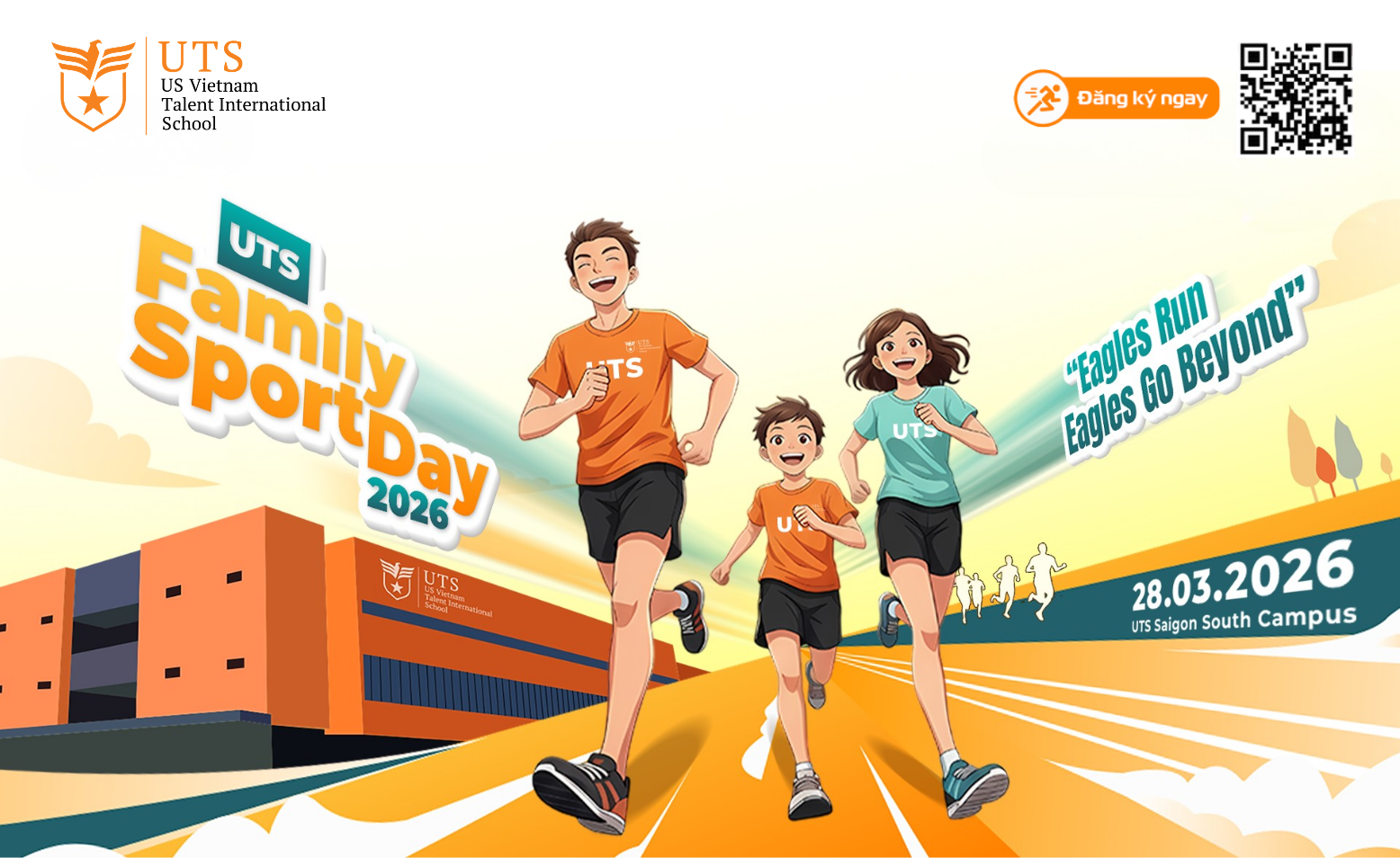
UTS Family Sport Day 2026 “Eagles Run, Eagles Go Beyond” officially returns
News & Events

UTS Family Sport Day 2026 “Eagles Run, Eagles Go Beyond” officially returns

The annual UTS Family Sport Day 2026 will bring a vibrant celebration where families can run together and connect with the UTS community.
UTS United for Central Vietnam: A Heartfelt Journey by the UTS Community
News & Events

UTS United for Central Vietnam: A Heartfelt Journey by the UTS Community

In the days when Central Vietnam was struggling in the aftermath of a historic flood, the UTS community came together to ignite a spirit of sharing through an urgent donation campaign in support of O Loan Commune in Dak Lak Province. From the heartfelt contributions of parents, students, and teachers to the generosity of benefactors, each gift of love was personally delivered to local residents and students at the heart of the flooded area. This journey not only provided timely support but also planted meaningful lessons in compassion and social responsibility in every member of the UTS community. The entire UTS community joined hands to raise donations for Central Vietnam, spreading love and compassion to the wider community A Call for Compassion from the Entire UTS Community Immediately after information about the severe flooding in Central Vietnam was released, the School launched an urgent donation campaign to support the residents of O Loan Commune, one of the areas most heavily affected and officially placed under an emergency status by the Dak Lak Provincial People’s Committee. UTS representatives present support gifts at the O Loan Commune Committee of the Vietnam Fatherland Front The donation appeal quickly received strong and enthusiastic support from parents, students, teachers, staff, and many compassionate individuals who have accompanied UTS over the years. The enthusiastic response from UTS parents, students, and teachers further strengthened the journey of spreading love and compassion Sharing Through Giving: Every Contribution Extends a Helping Hand Within a short period of time, the campaign received a large amount of both monetary and in kind donations. From clothing and blankets to notebooks and daily necessities, each item reflected heartfelt care and sincere sharing for communities affected by the floods. From essential supplies to the smallest items, every contribution carried the spirit of compassion from
Explore the Kindergarten campuses of UTS – Green, modern, and sustainable learning environments
News & Events

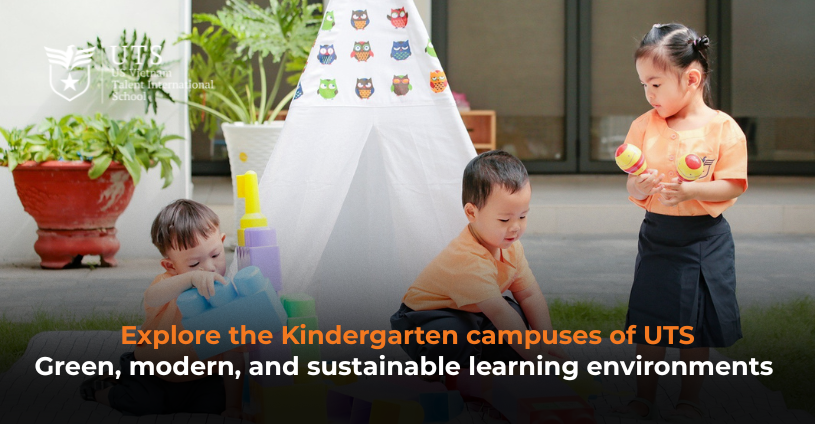
Explore the Kindergarten campuses of UTS – Green, modern, and sustainable learning environments

The early years of life are a golden period for shaping personality, habits, and a love of learning. Therefore, choosing the first school for your child is an extremely important decision for every family. Discover the Kindergarten campuses of US Vietnam Talent International School – where children learn in a modern environment, surrounded by green spaces close to nature, and follow an international curriculum that fosters holistic development, helping them embark on a journey of happiness and confidence. US Vietnam Talent International School – A strong foundation for future global citizens UK International Program At UTS, children follow a bilingual international curriculum designed based on the EYFS (Early Years Foundation Stage) – the UK Early Years Foundation Stage – helping them develop holistically in language, thinking, emotional, and social skills from the very first years of life. Aligned with the EYFS learning outcomes, the UTS Kindergarten program emphasizes a balance between learning and hands-on experiences, nurturing children across seven key areas: Literacy skills, Mathematical Thinking, Emotional & Social skills, Language & communication, Physical Development, Aesthetics & the arts, and Exploring the World. Each area serves as a stepping stone, laying a solid foundation for lifelong learning. In particular, with an international, continuous education system from Kindergarten to Grade 12, UTS offers a seamless learning journey that ensures students develop knowledge, skills, and life values evenly at every stage – from early childhood to adulthood. To ensure that each stage of development is carefully nurtured, UTS has built its curriculum around three core foundational programs: Oxford International Curriculum (OIC) The Oxford International Curriculum (OIC) at UTS is built around the philosophy of “The Joy of Learning”, ensuring that every school day begins with curiosity, excitement, and discovery. OIC encourages children to learn through hands-on experiences, observation, and inquiry, fostering independent thinking
Why students should be exposed to STEM education early on?
News & Events

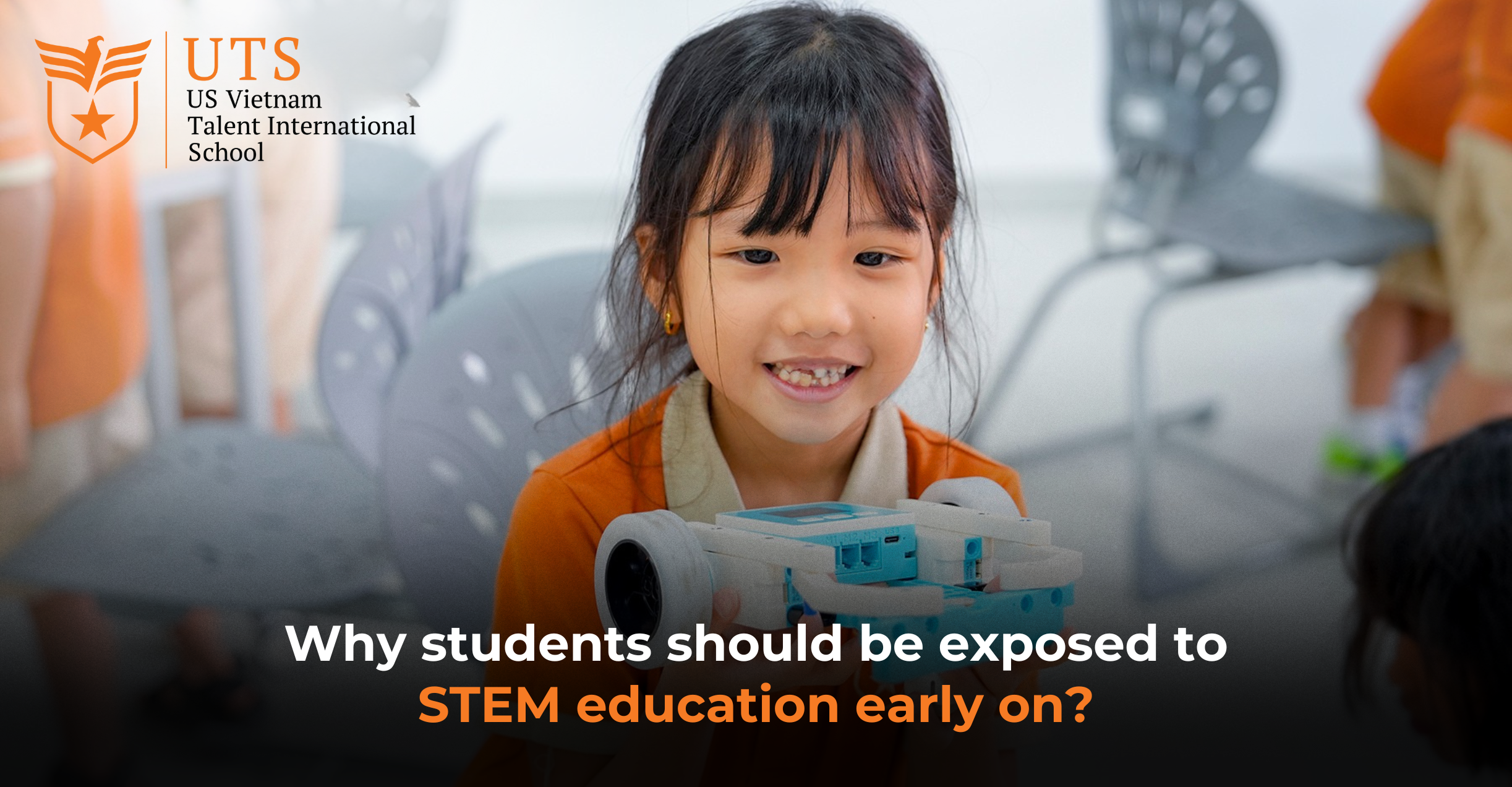
Why students should be exposed to STEM education early on?

In an era of rapid technological development, equipping students with critical thinking, creativity, and problem-solving skills is more essential than ever. STEM education is the key to helping the younger generation adapt and thrive in the future. At UTS, STEM is not only an academic component but a comprehensive educational approach that enables students to apply knowledge in real life, nurture a love of learning, and build global citizenship from an early age. What is STEM Education? STEM education is an integrated teaching philosophy that combines four disciplines: Science, Technology, Engineering, and Mathematics. This multidisciplinary approach equips students with practical knowledge and skills, in contrast to traditional academic teaching methods. STEM encourages students to apply interdisciplinary knowledge to solve real-world problems and situations. STEM connects theoretical knowledge with real-life application Why is STEM education important for your child’s future? In a world constantly transformed by technology, STEM education has become a foundational element to help children adapt and develop. Early exposure to STEM not only helps them understand the connection between academic knowledge and daily life but also prepares them with a strong foundation for entering future career paths. Below are the key benefits STEM education offers students in the 21st century: Developing practical problem-solving skills STEM goes beyond abstract concepts by focusing on real-life application. Students are encouraged to analyze situations, ask questions, experiment, and find solutions—critical thinking skills that help them proactively and flexibly respond to various challenges. Students practice analyzing situations and seeking solutions Fostering unlimited creativity STEM education empowers students with multidimensional thinking by encouraging them to approach problems from different perspectives. Instead of learning theory alone, students participate in hands-on activities such as model design, robotics programming, and scientific projects. These experiences enhance critical thinking, imagination, and creativity, which is essential for thriving in a
Khám phá những môn học đặc biệt tại Trường Quốc tế Nam Mỹ UTS và lợi ích vượt trội cho học sinh
News & Events

Khám phá những môn học đặc biệt tại Trường Quốc tế Nam Mỹ UTS và lợi ích vượt trội cho học sinh

At US Vietnam Talent International School (UTS), we proudly offer a holistic education program where each student is nurtured to develop both academically and in life skills. Distinctive subjects such as Well-being, Global Citizenship, Performing Arts,…. are key highlights that set UTS apart, rarely found in other bilingual schools but effectively integrated into our curriculum. This article provides an overview of these special subjects, helping parents better understand the value UTS brings to their child’s comprehensive development journey. About UTS – US Vietnam Talent International School Overview UTS is a member of the Van Lang Education Group, which has over 30 years of experience in education. We are also a strategic partner of Oxford University Press and a proud member of the Council of International Schools (CIS). With a mission to support students’ holistic development, UTS offers an international bilingual curriculum from Kindergarten to High School. Additionally, UTS is an official OxfordAQA testing center in Ho Chi Minh City, providing a British-standard academic pathway with recognized GCSE and A-Level qualifications. See more: The Oxford International Curriculum at UTS UTS Van Lang Complex Campus: Main gate: 69/68 Dang Thuy Tram, Binh Loi Trung Ward, Ho Chi Minh City Side gate: 80/68 Duong Quang Ham, An Nhon Ward, Ho Chi Minh City.   Modern and fully-equipped learning environment at UTS Van Lang Complex UTS Botanique Campus: 360D Ben Van Don, Vinh Hoi Ward, Ho Chi Minh City.   UTS Botanique Campus with a green learning space in the heart of the city UTS Saigon South Campus: 68 Street 22, Binh Hung, Ho Chi Minh City.   Experience an international-standard educational environment at UTS Saigon South Campus A diverse curriculum The UTS curriculum combines both the International and National education programs (Vietnam’s Ministry of Education and Training, 2018 standards), offering a personalized learning