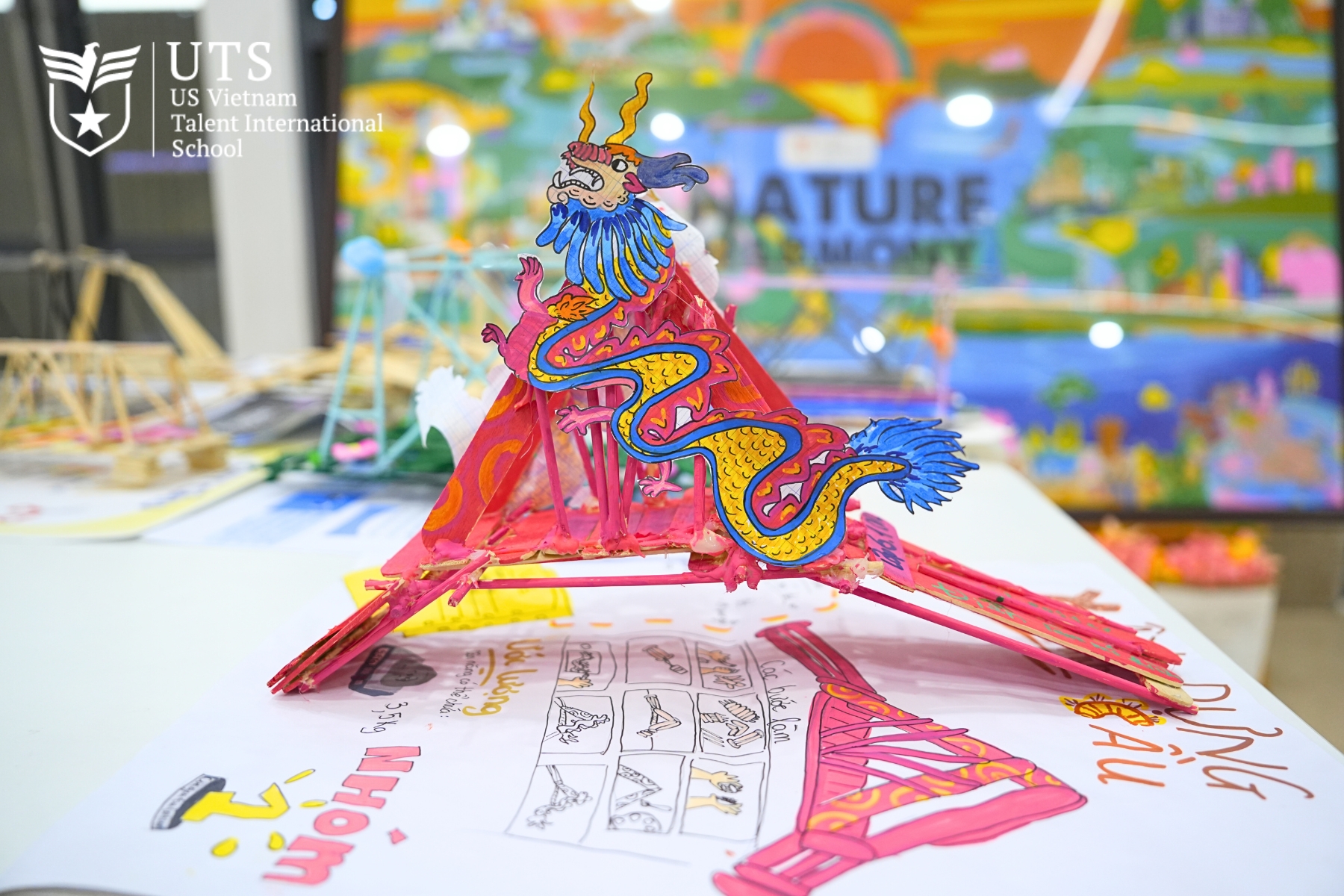
Experiential Learning: When learning is not only from book
At UTS we believe that every kid is a “unique seed” who deserves to grow up in his or her own way. We understand that our students need to be given the opportunity to learn in a way that is suitable for them while also respecting the differences in styles from our peers. Besides, not everyone is keen on traditional learning method.
This motivate UTS to apply the “Experiential Learning”(ExL) to the curriculum, providing an alternative to traditional learning models, and here we will share many highlights of the “Experiential Learning” method with parents and students.
1. What is Experiential Learning?
At its simplest, experiential learning (ExL) is the process of obtaining information and learning through experience, and can be further stripped down to simply be “learning through reflection on doing” (Patrick 2011: 1003).
Unlike the ” hands-on learning “, ExL formally requires reflection, whereas hands-on learning is simply the act of doing something. ExL theory is different from other theories of learning, such as cognitive and behavioral learning, insofar as it is a much more holistic approach. It takes into account all of our experiences in our learning, including emotions, cognition, and environmental factors. It advocates for more depth in learning, rather than surface-level learning. Surface-level learning involves things like studying for an exam or memorizing information from a textbook – often this information is not retained well and is easily and commonly forgotten after the test. In contrast, deep learning typically involves learning a topic from multiple angles and approaches, from reading and experimenting to role-playing and discussion.
2. How the ExL model works?
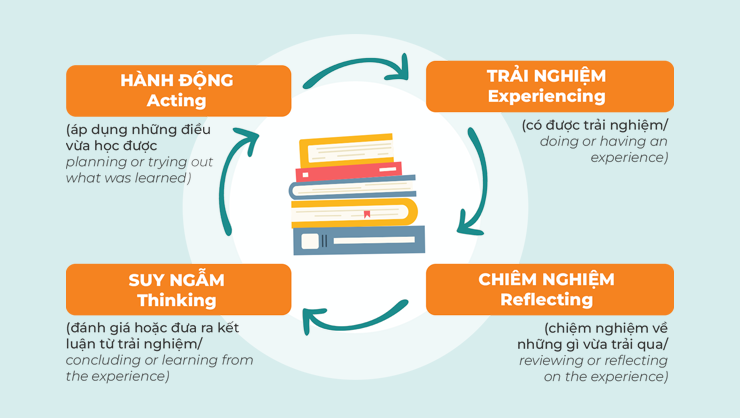
Operational model of the “Experiential learning” method
2.1: Experiencing:
This can be a completely new experience or a re-imagining of an experience that has already happened. In each specific experience, you will each participate in an activity. The key to learning is involvement. If students just read about it or watch it in action, it is not enough for them to really understand the problem and write it in long-term memory.
2.2: Reflecting:
This stage in the learning cycle allows the learner to ask questions and discuss the experience with others. Communication at this stage is vital, as it allows the learner to identify any discrepancies between their understanding and the experience itself.
2.3: Thinking:
Students have space to reflect on the experience by contemplating their own knowledge or discussing with peers. This involves interpreting the experience and making comparisons to their current understanding on the concept. Concepts need not be “new”; students can analyze new information and modify their conclusions on already existing ideas.
2.4: Acting:
Students return to participating in a task, this time with the goal of applying their conclusions to new experiences. They can analyze tasks and predict the results. By allowing students to put their knowledge into practice, they are ensuring that the information is retained in the future.
3. What are the benefits of Experiential Learning?
“There are two goals in the experiential learning process. One is to learn the specifics of a particular subject, and the other is to learn about one’s own learning process.”
Experiential learning has a number of significant teaching and learning advantages. Overall, the following are some of the biggest benefits of Experiential Learning:
- Increased room for creativity in the classroom, both for teachers and learners.
- Allows learners to learn from their mistakes.
- It encourages reflection and introspection.
- It makes it easier to grasp difficult or abstract concepts.
- It prepares young learners for future experiences and adult life, creating lifelong skills needed to approach the modern world.
Teachers utilizing the method have observed improved attitudes toward learning.
4. How can UTS apply Experiential Learning to the curriculum?
“I hear and I forget. I see and I remember. I do and I understand”. – Confucious
At UTS, we believe in the power of Experiential Learning. because we have seen it work with our students. We always integrate ExL into the curriculum including the National Program and the International Program.
In the primary school, our students have discovered experiential learning in a number of different ways. On the non-academic side of things, the Oxford International Curriculum focuses on well-being, where the students learn the value of having a healthy mind and body.
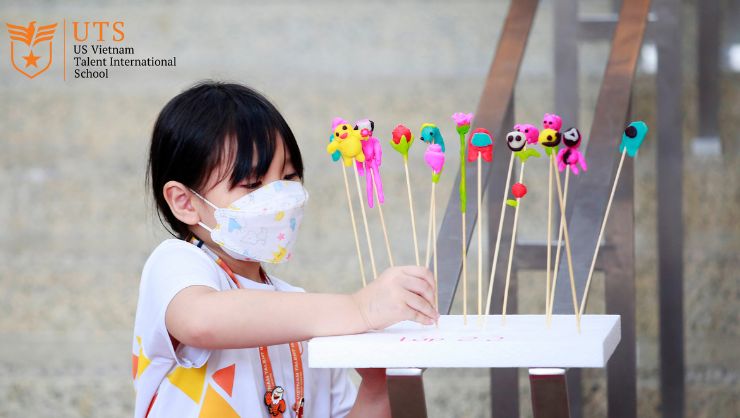
Project “Tò he ơi!” of Primary school students
- In terms of having a healthy body, the students learn how to play sports, get advice from their coach or PE teacher, then improve themselves on a day-to-day basis. They learn about meditation and centering their minds, then practice meditating to boost focus and become more at peace with themselves. The students took the theory they learned in the classroom and brought it to their real lives, learning the value of a healthy mind.
- Academically, we see the students learn about the importance of having healthy diets, then create their own simple recipes on paper and then actually try to make the recipes themselves, and finally present their findings to their classmates. We see all the different stages in action here – learning and gaining theoretical knowledge from the classroom, creating their own ideas, putting them to the test and finally going back to the design board to redo their recipes and make something new and even tastier.
In the secondary school, “Experiential Learning” is focused on integrating into science subjects such as Biology, Chemistry, etc. Students experience practical phenomena and things to grasp knowledge in the most effective way.
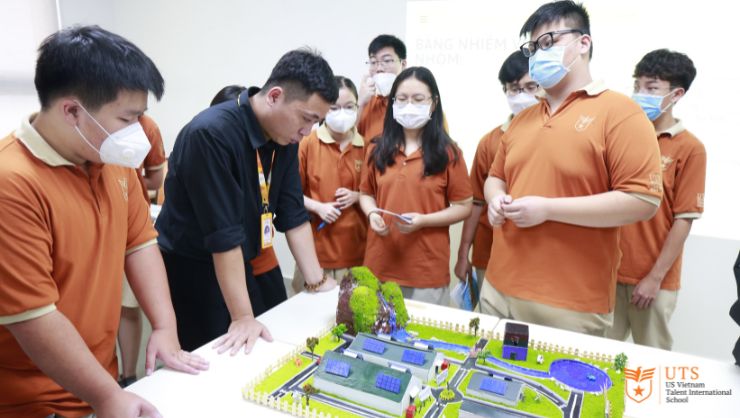
Geography Class: Project “Designing Industrial Parks”
They do not need to remember the location of the organs in the textbook drawings, but instead the actual observation of the animal’s body. This not only helps students remember for a long time but also understands the activities of each organ. Another example is for Chemistry, students are allowed to do experiments to observe the phenomenon in a specific way instead of just being known through paper-based chemical equations. Essentially, the students learn to connect the dots between reality and theory. This is further enhanced through both the STEM and Robotics classes, where the students undertake interdisciplinary subjects – Science, Technology, Engineering and Math – and mix them together to create new and innovative robots and designs to be able to understand why they’ve been learning about coding, physics and mathematics. They are able to troubleshoot their problems, discuss with peers and their teachers, then make amendments to their projects.
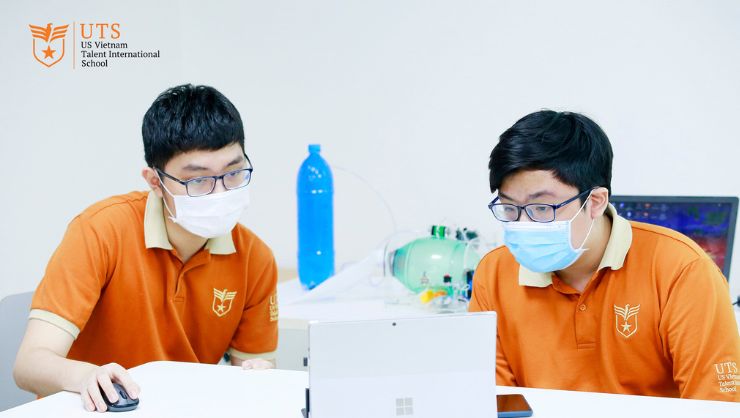
Finalist of STEM INNOVATION DAY 2021
CONCLUDING REMARKS
No matter who you are, whether you’re a teacher, student, or something completely different, experiential learning can be extremely valuable. It encourages the idea that learning is a lifelong process and that you don’t have to stick to traditional learning methods in order to develop personally or professionally. As 21st century learners, it is vital that our students take advantage of the opportunities to acquire information and knowledge in such a way that fits them and their respective learning styles, and we believe that Experiential learning provides the opportunities for students of all intelligences and learning styles to learn in a way that makes sense for them.
| TRƯỜNG QUỐC TẾ NAM MỸ UTS |
| Cơ sở 1 | UTS Van Lang Complex |
|
| Cơ sở 2 | UTS Botanique Campus |
|
| LIÊN HỆ |
|
UTS Family Sport Day 2026 “Eagles Run, Eagles Go Beyond” officially returns
Khám phá những môn học đặc biệt tại Trường Quốc tế Nam Mỹ UTS và lợi ích vượt trội cho học sinh
Why students should be exposed to STEM education early on?
Vietnam’s Mark – A journey of heart and pride in the nation