
DO PARENTS KNOW? | HELP CHILDREN PLAN FOR THE FUTURE: HELP THEM TO BE IMPROVED INSTEAD OF BEING PERFECT.


Parents always seem to want their children to get high scores, develop well to become the best they can be at school. But in fact, improving themselves every day is the most necessary thing to help your child have enough experiences to step firmly in the future. Children not only need to be educated with academic knowledge but also need to have skills in self-development and unleashing their potential. From an early age, parents can help their children improve themselves from the following simple things:

1. Let children face up and solve their own problems.

Not only adults, but children also face many problems every day, from difficulties in the learning process, pressure on grades, relationships with teachers and friends, physical health and mental health, etc. But not all children have enough skill or confidence to solve their problems.

If not guided by parents, children will become timid, thereby choosing to run away instead of facing and solving each problem. This is also the reason why many children have a lot of trouble in school as well as in their life. Children who lack problem-solving skills tend to lack careful thinking in everything and are not oriented to what they should do.

Therefore, teaching children to face problems and solve them will help them be more active in life, improve logical and critical thinking. When a specific problem occurs, parents should not help children do it right away. Instead, let your child analyze and define the problem. Parents can still be available to guide children when they need support, but it is still a priority to encourage children to solve their own problems first.

If your child is having trouble with giving solutions, parents can sit down with children to discuss what should be done to be effective, so that they can use their logical thinking, because young children often come up with new ideas, lots of creative solutions. Sometimes just a small suggestion can develop into a lot of great ideas on their own. And finally, don’t forget to praise your child every time they take the initiative to solve a problem.

2. Be ready for your child to stumble and learn to face challenges.

Parents always give the best thing for their children, but at some point, if you are not careful, that protection and love are very easy to counteract. Instead of making decisions for children, parents should let children choose their own path, live fully with dreams, ambitions, and face challenges. This is the best way to sharpen courage in your child. Parents cannot be with your children forever, so teach them how to be independent so that they can live happily.

Children need parents to protect and support them, but when they are incoming of age stage, parents should teach them to make their own decisions and take responsibility for life. This is also one of the core values that UTS always aims for: Courage. Let your children strongly pursue their dreams, orient themselves if they are wrong, support them when they fall, always follow every step, and accompany them. Letting children apply their knowledge and experiences to life will also make them more courageous.

Growing up is a process in which parents always have their back, not the ones who “roll out the velvet carpet” for the child to walk with legs that have no chance to be sturdy.

3. Let children develop their own potential

Each child will have a unique ability in each aspect. According to Professor Howard Gardner’s theory of multiple intelligences, there are eight types of intelligence that are identified and recognized in humans. Therefore, each child will have a unique ability to develop in one or a few certain aspects. Many parents have the assumption that their children need to study well at school, but this is not the case.

Each of you will have different strengths and we should not impose our subjective expectations on children. Parents need to pay attention to the interests of their children to develop what they are passionate about. When children learn and grow with their own passion, they will find joy in learning new knowledge. Understanding that, at UTS, each student is cared for and facilitated to develop their potential with appropriate study programs, helping them apply skills in real life, family, and society.

4. Encourage children to be integrity in all situations.

In addition to developing social and thinking skills, many parents are often subjective when it comes to helping children form character from an early age. Educating children with good virtues from an early age, especially the virtue of honesty, helps them shape their personality and decide for their next life.

To help children develop this quality, parents only need to apply simple methods: do not push the child into situations to try to see if he is lying or not, those situations will put them in a difficult position and will lie so as not to be punished. Instead, encourage your child to learn from the experience, be more careful the next time. Being too harsh will make your child afraid and not dare to take responsibility.

In addition, parents also need to be honest and dare to admit the personal weaknesses. Parents themselves are the biggest model for their children to look at. Sometimes, admitting your faults to your children makes you fear that your child will no longer respect you, but acting honestly and willingly to admit mistakes with your child will also help build trust and a good environment in the family. UTS also always puts integrity as one of the top qualities for nurturing students, which helps them to keep their trust and always say no to false behaviors.
 

Tin tức khác
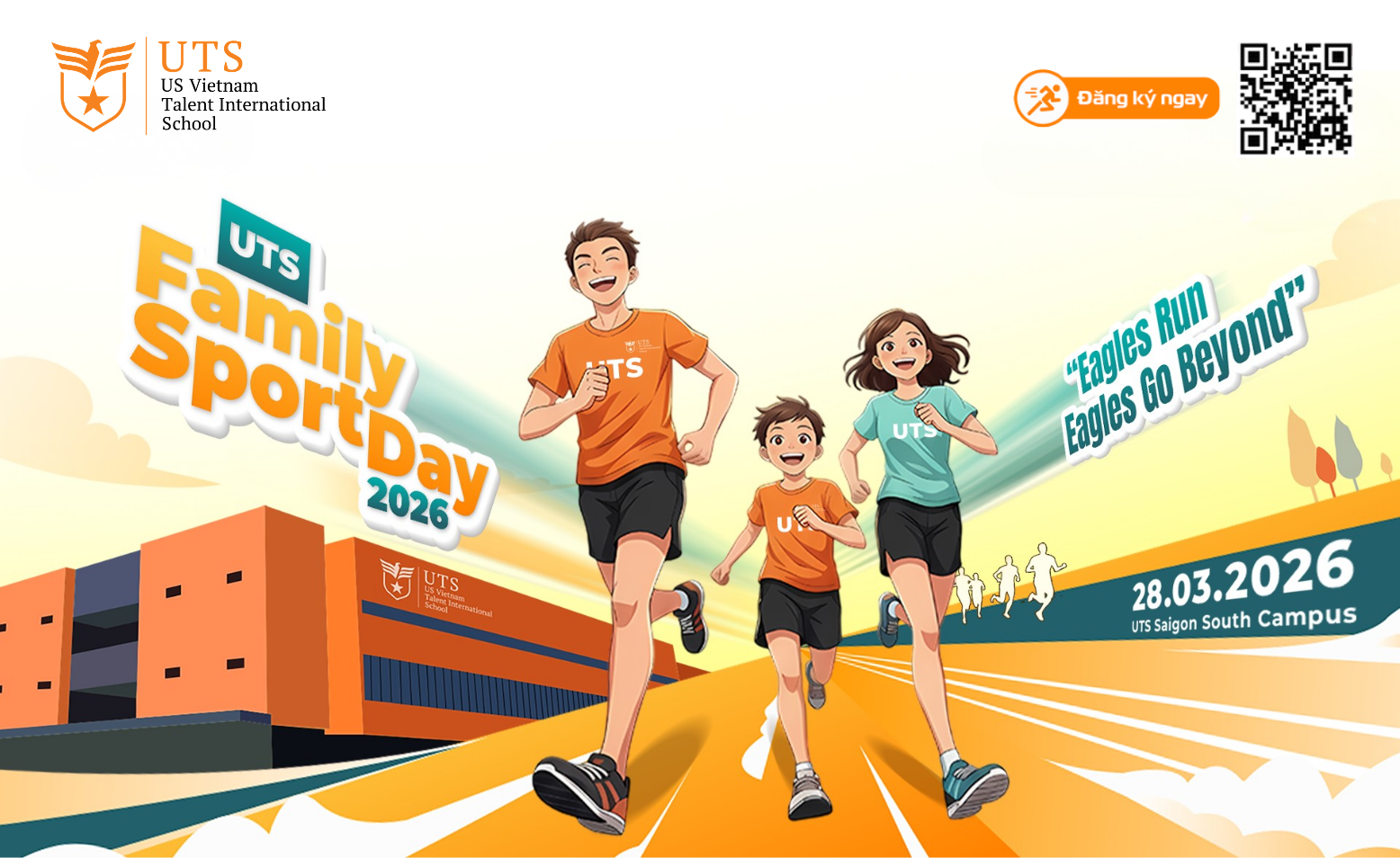
UTS Family Sport Day 2026 “Eagles Run, Eagles Go Beyond” officially returns
News & Events

UTS Family Sport Day 2026 “Eagles Run, Eagles Go Beyond” officially returns

The annual UTS Family Sport Day 2026 will bring a vibrant celebration where families can run together and connect with the UTS community.
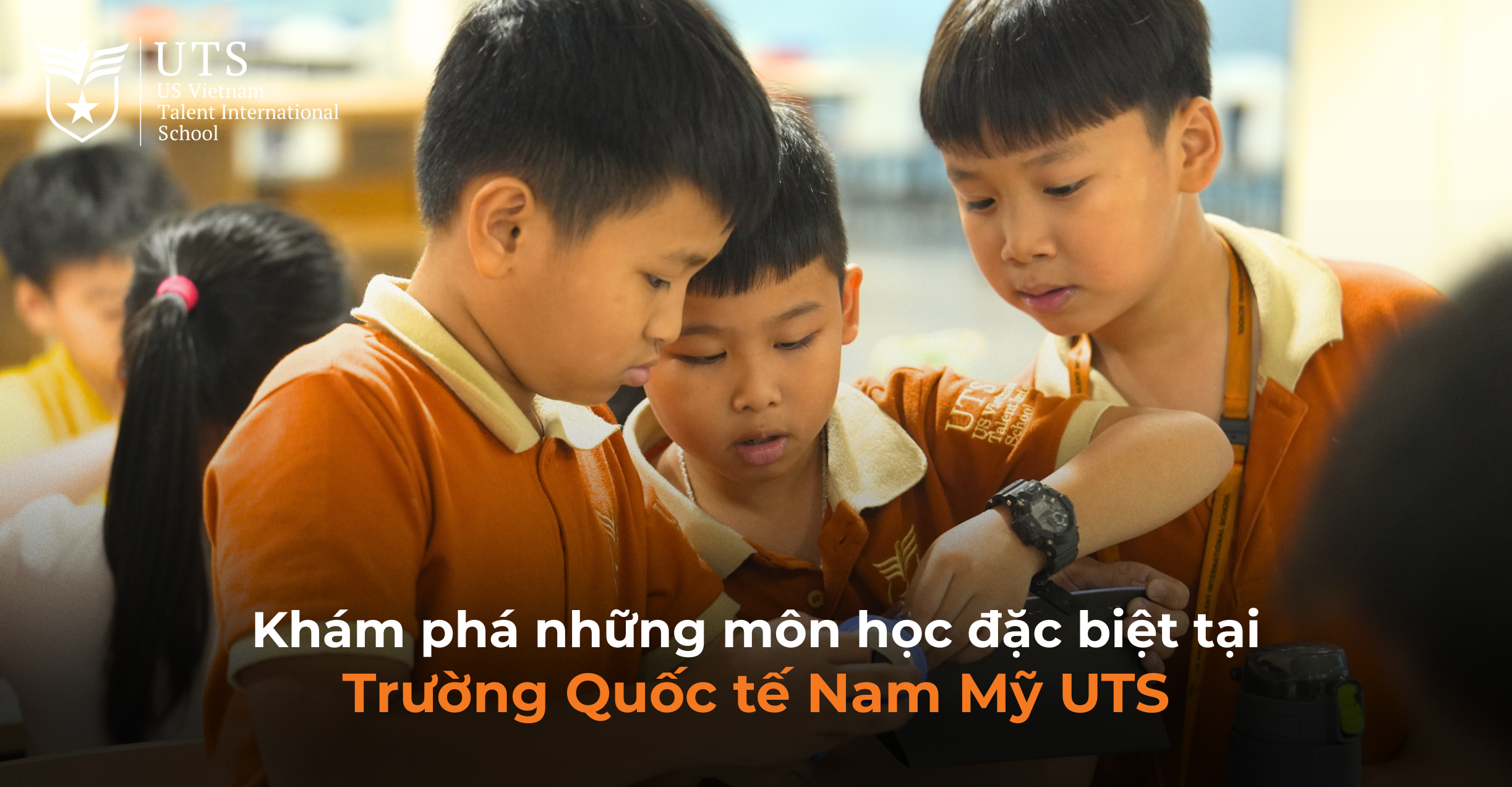
Khám phá những môn học đặc biệt tại Trường Quốc tế Nam Mỹ UTS và lợi ích vượt trội cho học sinh
News & Events

Khám phá những môn học đặc biệt tại Trường Quốc tế Nam Mỹ UTS và lợi ích vượt trội cho học sinh

At US Vietnam Talent International School (UTS), we proudly offer a holistic education program where each student is nurtured to develop both academically and in life skills. Distinctive subjects such as Well-being, Global Citizenship, Performing Arts,…. are key highlights that set UTS apart, rarely found in other bilingual schools but effectively integrated into our curriculum. This article provides an overview of these special subjects, helping parents better understand the value UTS brings to their child’s comprehensive development journey. About UTS – US Vietnam Talent International School Overview UTS is a member of the Van Lang Education Group, which has over 30 years of experience in education. We are also a strategic partner of Oxford University Press and a proud member of the Council of International Schools (CIS). With a mission to support students’ holistic development, UTS offers an international bilingual curriculum from Kindergarten to High School. Additionally, UTS is an official OxfordAQA testing center in Ho Chi Minh City, providing a British-standard academic pathway with recognized GCSE and A-Level qualifications. See more: The Oxford International Curriculum at UTS UTS Van Lang Complex Campus: Main gate: 69/68 Dang Thuy Tram, Binh Loi Trung Ward, Ho Chi Minh City Side gate: 80/68 Duong Quang Ham, An Nhon Ward, Ho Chi Minh City.   Modern and fully-equipped learning environment at UTS Van Lang Complex UTS Botanique Campus: 360D Ben Van Don, Vinh Hoi Ward, Ho Chi Minh City.   UTS Botanique Campus with a green learning space in the heart of the city UTS Saigon South Campus: 68 Street 22, Binh Hung, Ho Chi Minh City.   Experience an international-standard educational environment at UTS Saigon South Campus A diverse curriculum The UTS curriculum combines both the International and National education programs (Vietnam’s Ministry of Education and Training, 2018 standards), offering a personalized learning
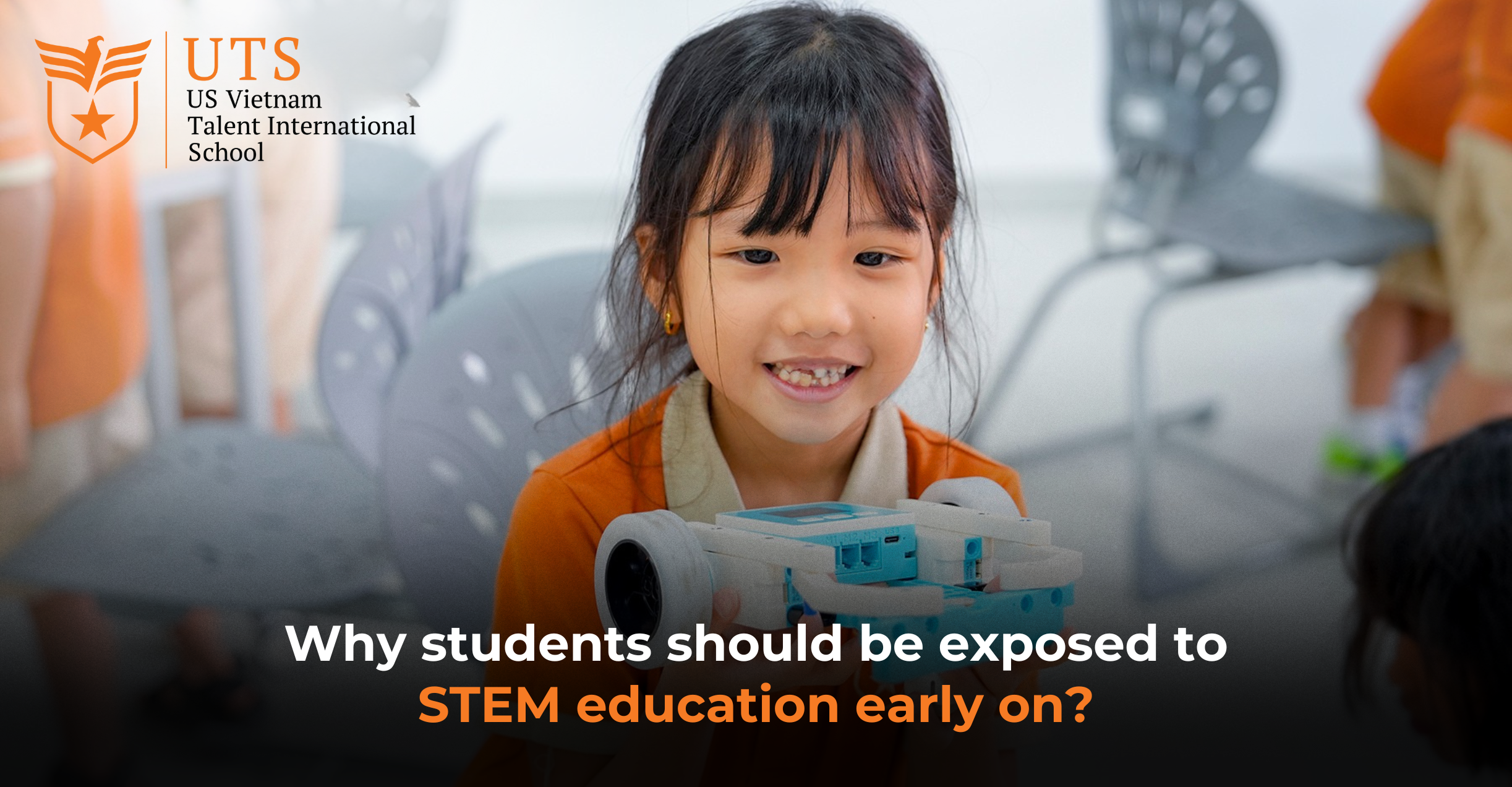
Why students should be exposed to STEM education early on?
News & Events

Why students should be exposed to STEM education early on?

In an era of rapid technological development, equipping students with critical thinking, creativity, and problem-solving skills is more essential than ever. STEM education is the key to helping the younger generation adapt and thrive in the future. At UTS, STEM is not only an academic component but a comprehensive educational approach that enables students to apply knowledge in real life, nurture a love of learning, and build global citizenship from an early age. What is STEM Education? STEM education is an integrated teaching philosophy that combines four disciplines: Science, Technology, Engineering, and Mathematics. This multidisciplinary approach equips students with practical knowledge and skills, in contrast to traditional academic teaching methods. STEM encourages students to apply interdisciplinary knowledge to solve real-world problems and situations. STEM connects theoretical knowledge with real-life application Why is STEM education important for your child’s future? In a world constantly transformed by technology, STEM education has become a foundational element to help children adapt and develop. Early exposure to STEM not only helps them understand the connection between academic knowledge and daily life but also prepares them with a strong foundation for entering future career paths. Below are the key benefits STEM education offers students in the 21st century: Developing practical problem-solving skills STEM goes beyond abstract concepts by focusing on real-life application. Students are encouraged to analyze situations, ask questions, experiment, and find solutions—critical thinking skills that help them proactively and flexibly respond to various challenges. Students practice analyzing situations and seeking solutions Fostering unlimited creativity STEM education empowers students with multidimensional thinking by encouraging them to approach problems from different perspectives. Instead of learning theory alone, students participate in hands-on activities such as model design, robotics programming, and scientific projects. These experiences enhance critical thinking, imagination, and creativity, which is essential for thriving in a
Vietnam’s Mark – A journey of heart and pride in the nation
News & Events

Vietnam’s Mark – A journey of heart and pride in the nation

On April 25, 2025, at the Trinh Cong Son stage, UTS students performed the emotional arts program “Vietnam’s Mark” to celebrate April 30 – the Liberation of the South and the reunification of the country. Concluding with a choral performance of the same name, they sent a powerful message: The younger generation of UTS pledges to live with ideals, contribute, and preserve the bloodline of Lac Hong flowing strongly in every heartbeat of the new era.   100% of elementary school students participated, each contributing to the final product. Through this, they developed confidence, a spirit of contribution, teamwork skills, and a sense of pride in showcasing Vietnamese identity on stage.   Specially, the entire ticket sales revenue – 46,300,000 VND – was contributed to the UTS Impact Fund, as a practical lesson on social responsibility and compassion. The students learned that even small efforts can make a positive impact on the community.   Beyond national pride, UTS students also nurture the aspiration to reach out to the world – developing, learning constantly to become global citizens carrying the essence of Vietnam. This is the journey of integration but not assimilation, reaching high but always staying grounded.   Proud to be Vietnamese!
Project “Talented Bridge-Building Architect” at UTS
News & Events

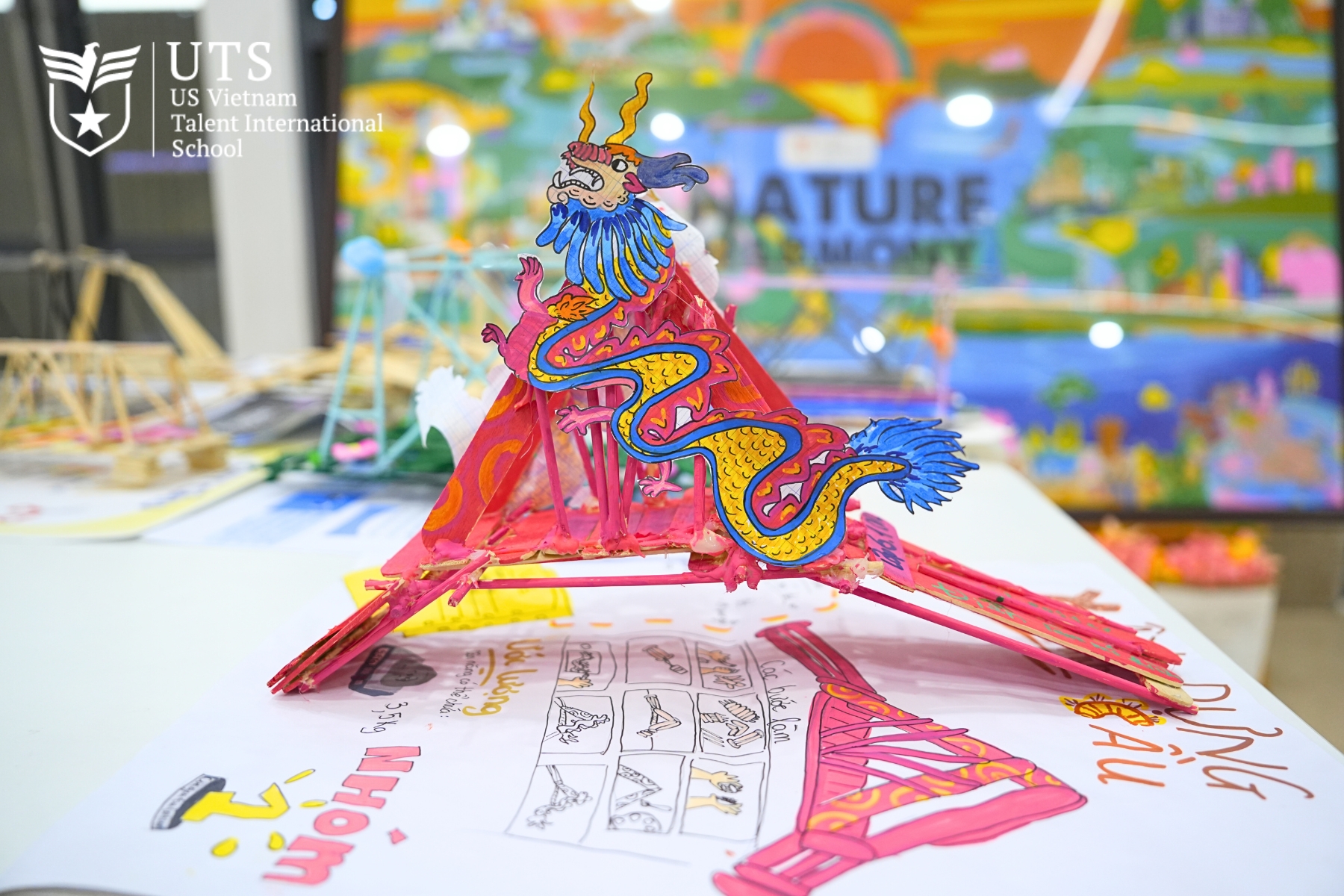
Project “Talented Bridge-Building Architect” at UTS

The 6th-grade UTS-ers have completed the bridge-building challenge in the “Talented Architect Contest,” showcasing their creativity and design skills. From the initial sketches to the final structure, they collaborated to conceptualize and construct a durable bridge model.   Beyond just “building,” they also tested durability, made improvements, and added aesthetic touches to ensure their projects met both functional and artistic standards. This was a great opportunity for them to develop technical thinking, teamwork skills, and apply STEM knowledge in practice.