
Do Parents Know? Don’t Turn Disagreements Into The “Invisible” Distance With Children

Any close relationship may face difficulties from time to time. Especially between parents and children, with age differences and a variety of other objective and subjective factors, unpleasant conflicts or disagreements might arise accidentally.

In the position of parents, parents have a significant obligation to educate your children grasp the difference between good and bad, right and wrong, and other key ethical principles to prepare for life. However, among youngsters, particularly in adolescence, the desire to be acknowledged as self-sufficient and mature, as well as the urge to prove themselves, becomes incredibly great. Parents, on the other hand, may have your own set of rules and expectations for your children. As a result, many families must have experienced many unhappy times between parents and children when educating and directing your children.

Here are some suggestions to assist parents in reducing and improving this issue:

1. Neither the parent nor the child must be the “winner” of an arguments

First, parents must equip yourselves with a more relaxed temperament and perspective, understanding that family conflict is unavoidable. Because life may be so hectic at times, parents may not always be able to pay attention, care for, and understand your children’s signs. Alternatively, there may be occasions when parents struggle to control your negative emotions to your child’s misbehaving.

Instead of worrying excessively or attempting to be severe, parents might opt to respond in a more positive manner. In truth, the most important thing in a debate is to be heard and understood, not to be the “winner”. When conflicts arise, parents can practice restraining your anger and saving your arguments as well as things to say until a more opportune moment. Our ultimate objective is for our children to have a better understanding of the situation, so pick a moment and a reaction that is least upsetting to all sides.

2. No one is to blame for disagreement

Relationships between parents and children can last anywhere from two to four decades. As a result, it’s quite natural to disagree. Some parents, on the other hand, have a tendency to be harsh when your child’s view on life is contradictory. To preserve their ego, youngsters develop furious and protective feelings, which can occasionally lead to a “cold war”.

When it’s important to establish limits for kids, the key to staying connected is for parents to understand how your children are experiencing at that time. Parents can take classes to learn about your children’s psychology or listen to specialists share their knowledge. Parents can gradually learn to sympathize with your children’s aspirations and use gentler language to assist them grasp the positive goals we want them to achieve before they satisfy their own demands. For example, “I know you want to go out and play, but you need to do your homework first. After that, you’re free to relax for a while”. This is preferable to just saying, “No, you can’t go out. You must stay at home and finish your homework”.

3. Choose topics to discuss

A Sociology professor said: “Tolerance is easier to maintain when we keep a healthy distance from people who are so different from us”. We should divide conflicts into two categories:

“Debatable” includes topics that have a direct, immediate, or serious impact on your children’s life. It may be when your children is riding too fast, but when they are cautioned, they insist that they are still safe. This is undoubtedly a matter that will need to be discussed, since the cost of not doing so would be quite significant.

“Undebatable” refers to issues that do not have a significant impact or take a long time to alter. For example, when children want to take a break from an extracurricular activity, parents should show concern and communicate with them to encourage or better understand them, rather than forcing them to participate in accordance with their parents’ views.

The classification will assist parents in determining the next course of action in a conflict scenario, eliminating unneeded negatives and unseen distances that may cause harm or pain to both children and parents.

In conclusion

Sharing and understanding the emotional lives and urgent needs of children is the quickest approach to settle any disagreements and psychological problems between parents and children. Caring for children’s pleasures, sufferings, wants, and dreams is extremely important to the parent-child connection, since it ensures that children are always treated with respect and care. Parents should be proud of your children’s desire to be independent and self-reliant, and offer the ideal conditions for children to assert themselves in the parental control threshold.
Tin tức khác
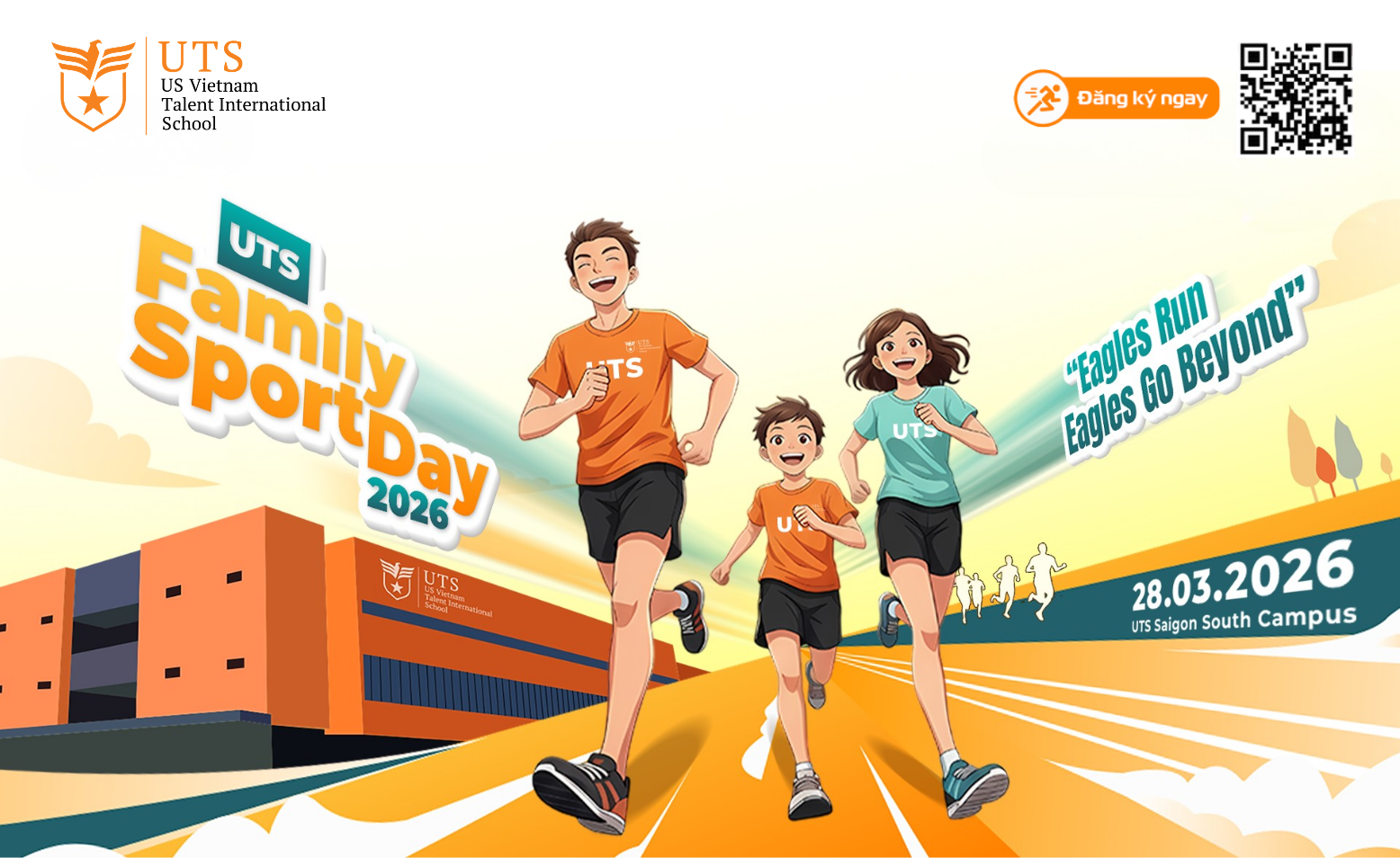
UTS Family Sport Day 2026 “Eagles Run, Eagles Go Beyond” officially returns
News & Events

UTS Family Sport Day 2026 “Eagles Run, Eagles Go Beyond” officially returns

The annual UTS Family Sport Day 2026 will bring a vibrant celebration where families can run together and connect with the UTS community.
UTS United for Central Vietnam: A Heartfelt Journey by the UTS Community
News & Events

UTS United for Central Vietnam: A Heartfelt Journey by the UTS Community

In the days when Central Vietnam was struggling in the aftermath of a historic flood, the UTS community came together to ignite a spirit of sharing through an urgent donation campaign in support of O Loan Commune in Dak Lak Province. From the heartfelt contributions of parents, students, and teachers to the generosity of benefactors, each gift of love was personally delivered to local residents and students at the heart of the flooded area. This journey not only provided timely support but also planted meaningful lessons in compassion and social responsibility in every member of the UTS community. The entire UTS community joined hands to raise donations for Central Vietnam, spreading love and compassion to the wider community A Call for Compassion from the Entire UTS Community Immediately after information about the severe flooding in Central Vietnam was released, the School launched an urgent donation campaign to support the residents of O Loan Commune, one of the areas most heavily affected and officially placed under an emergency status by the Dak Lak Provincial People’s Committee. UTS representatives present support gifts at the O Loan Commune Committee of the Vietnam Fatherland Front The donation appeal quickly received strong and enthusiastic support from parents, students, teachers, staff, and many compassionate individuals who have accompanied UTS over the years. The enthusiastic response from UTS parents, students, and teachers further strengthened the journey of spreading love and compassion Sharing Through Giving: Every Contribution Extends a Helping Hand Within a short period of time, the campaign received a large amount of both monetary and in kind donations. From clothing and blankets to notebooks and daily necessities, each item reflected heartfelt care and sincere sharing for communities affected by the floods. From essential supplies to the smallest items, every contribution carried the spirit of compassion from
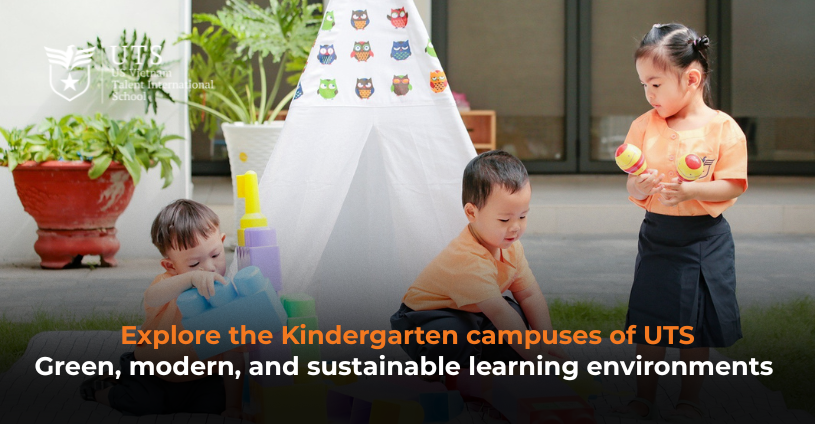
Explore the Kindergarten campuses of UTS – Green, modern, and sustainable learning environments
News & Events

Explore the Kindergarten campuses of UTS – Green, modern, and sustainable learning environments

The early years of life are a golden period for shaping personality, habits, and a love of learning. Therefore, choosing the first school for your child is an extremely important decision for every family. Discover the Kindergarten campuses of US Vietnam Talent International School – where children learn in a modern environment, surrounded by green spaces close to nature, and follow an international curriculum that fosters holistic development, helping them embark on a journey of happiness and confidence. US Vietnam Talent International School – A strong foundation for future global citizens UK International Program At UTS, children follow a bilingual international curriculum designed based on the EYFS (Early Years Foundation Stage) – the UK Early Years Foundation Stage – helping them develop holistically in language, thinking, emotional, and social skills from the very first years of life. Aligned with the EYFS learning outcomes, the UTS Kindergarten program emphasizes a balance between learning and hands-on experiences, nurturing children across seven key areas: Literacy skills, Mathematical Thinking, Emotional & Social skills, Language & communication, Physical Development, Aesthetics & the arts, and Exploring the World. Each area serves as a stepping stone, laying a solid foundation for lifelong learning. In particular, with an international, continuous education system from Kindergarten to Grade 12, UTS offers a seamless learning journey that ensures students develop knowledge, skills, and life values evenly at every stage – from early childhood to adulthood. To ensure that each stage of development is carefully nurtured, UTS has built its curriculum around three core foundational programs: Oxford International Curriculum (OIC) The Oxford International Curriculum (OIC) at UTS is built around the philosophy of “The Joy of Learning”, ensuring that every school day begins with curiosity, excitement, and discovery. OIC encourages children to learn through hands-on experiences, observation, and inquiry, fostering independent thinking
Why students should be exposed to STEM education early on?
News & Events

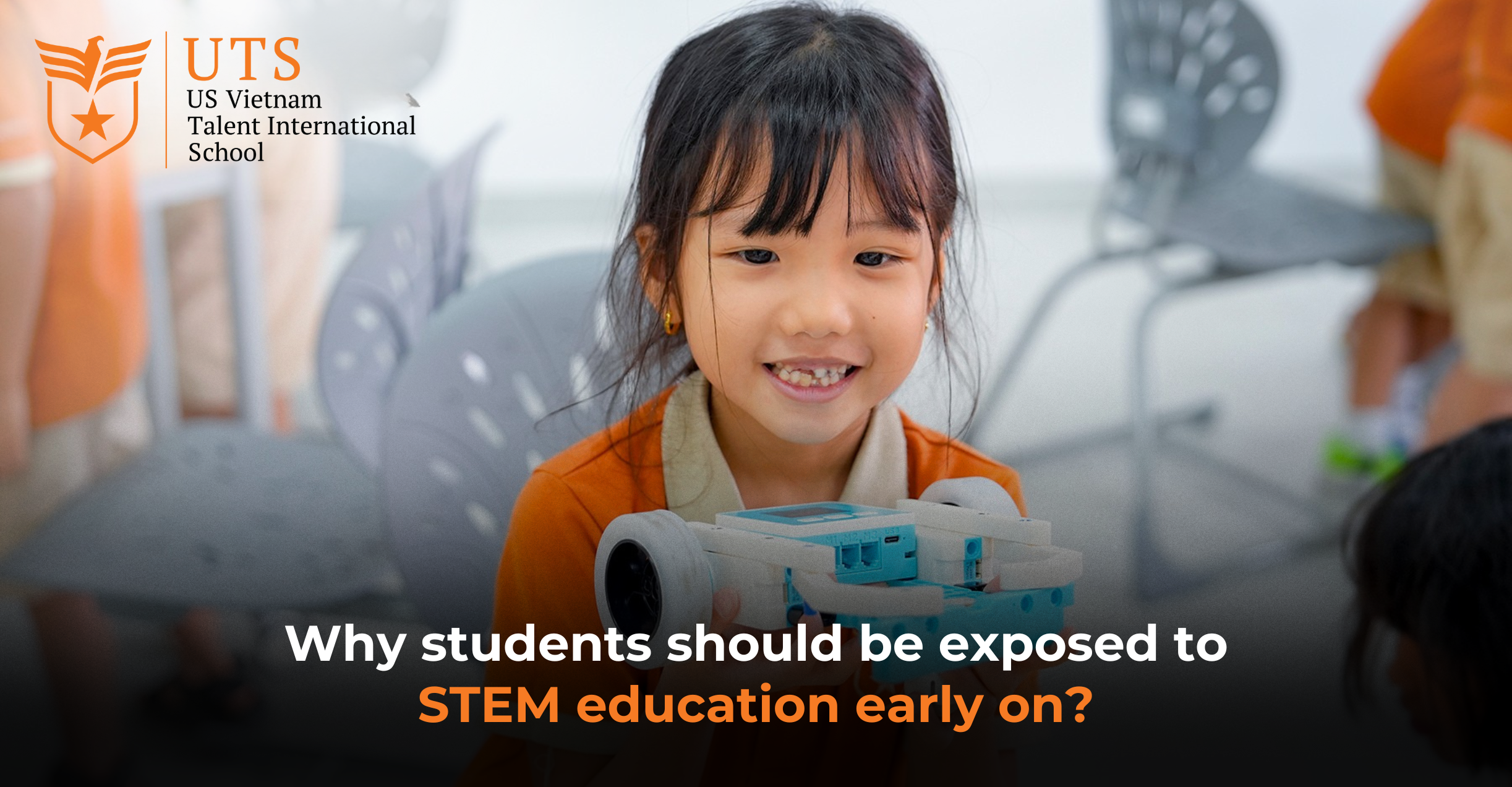
Why students should be exposed to STEM education early on?

In an era of rapid technological development, equipping students with critical thinking, creativity, and problem-solving skills is more essential than ever. STEM education is the key to helping the younger generation adapt and thrive in the future. At UTS, STEM is not only an academic component but a comprehensive educational approach that enables students to apply knowledge in real life, nurture a love of learning, and build global citizenship from an early age. What is STEM Education? STEM education is an integrated teaching philosophy that combines four disciplines: Science, Technology, Engineering, and Mathematics. This multidisciplinary approach equips students with practical knowledge and skills, in contrast to traditional academic teaching methods. STEM encourages students to apply interdisciplinary knowledge to solve real-world problems and situations. STEM connects theoretical knowledge with real-life application Why is STEM education important for your child’s future? In a world constantly transformed by technology, STEM education has become a foundational element to help children adapt and develop. Early exposure to STEM not only helps them understand the connection between academic knowledge and daily life but also prepares them with a strong foundation for entering future career paths. Below are the key benefits STEM education offers students in the 21st century: Developing practical problem-solving skills STEM goes beyond abstract concepts by focusing on real-life application. Students are encouraged to analyze situations, ask questions, experiment, and find solutions—critical thinking skills that help them proactively and flexibly respond to various challenges. Students practice analyzing situations and seeking solutions Fostering unlimited creativity STEM education empowers students with multidimensional thinking by encouraging them to approach problems from different perspectives. Instead of learning theory alone, students participate in hands-on activities such as model design, robotics programming, and scientific projects. These experiences enhance critical thinking, imagination, and creativity, which is essential for thriving in a
Khám phá những môn học đặc biệt tại Trường Quốc tế Nam Mỹ UTS và lợi ích vượt trội cho học sinh
News & Events

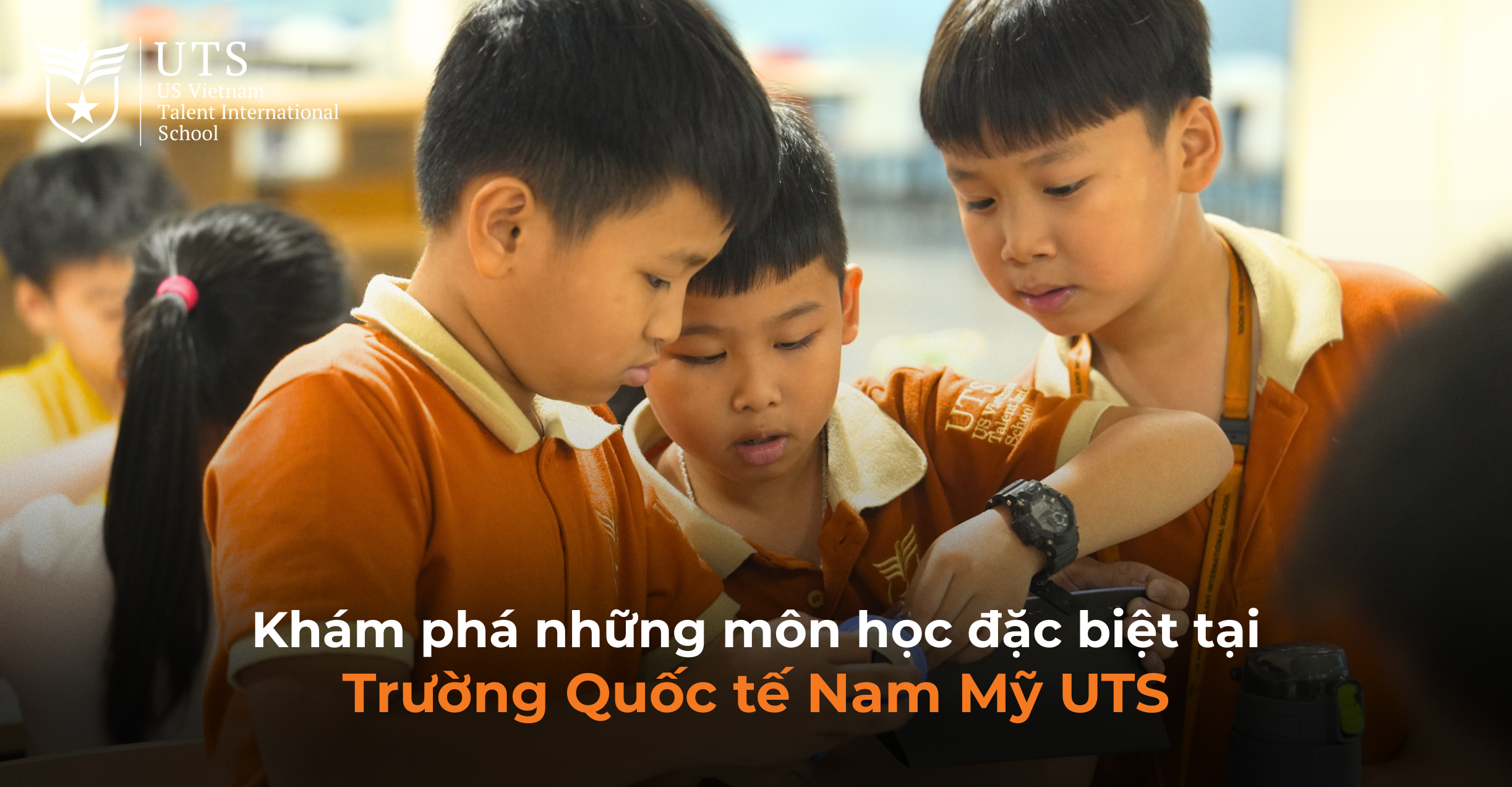
Khám phá những môn học đặc biệt tại Trường Quốc tế Nam Mỹ UTS và lợi ích vượt trội cho học sinh

At US Vietnam Talent International School (UTS), we proudly offer a holistic education program where each student is nurtured to develop both academically and in life skills. Distinctive subjects such as Well-being, Global Citizenship, Performing Arts,…. are key highlights that set UTS apart, rarely found in other bilingual schools but effectively integrated into our curriculum. This article provides an overview of these special subjects, helping parents better understand the value UTS brings to their child’s comprehensive development journey. About UTS – US Vietnam Talent International School Overview UTS is a member of the Van Lang Education Group, which has over 30 years of experience in education. We are also a strategic partner of Oxford University Press and a proud member of the Council of International Schools (CIS). With a mission to support students’ holistic development, UTS offers an international bilingual curriculum from Kindergarten to High School. Additionally, UTS is an official OxfordAQA testing center in Ho Chi Minh City, providing a British-standard academic pathway with recognized GCSE and A-Level qualifications. See more: The Oxford International Curriculum at UTS UTS Van Lang Complex Campus: Main gate: 69/68 Dang Thuy Tram, Binh Loi Trung Ward, Ho Chi Minh City Side gate: 80/68 Duong Quang Ham, An Nhon Ward, Ho Chi Minh City.   Modern and fully-equipped learning environment at UTS Van Lang Complex UTS Botanique Campus: 360D Ben Van Don, Vinh Hoi Ward, Ho Chi Minh City.   UTS Botanique Campus with a green learning space in the heart of the city UTS Saigon South Campus: 68 Street 22, Binh Hung, Ho Chi Minh City.   Experience an international-standard educational environment at UTS Saigon South Campus A diverse curriculum The UTS curriculum combines both the International and National education programs (Vietnam’s Ministry of Education and Training, 2018 standards), offering a personalized learning