
News

News & Events
UTS Family Sport Day 2026 “Eagles Run, Eagles Go Beyond” officially returns
The annual UTS Family Sport Day 2026 will bring a vibrant celebration where families can run together and connect with the UTS community.
News & Events
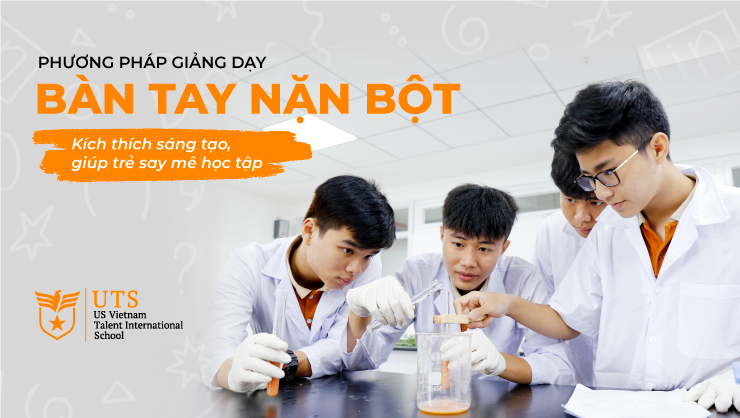
“Hands-on” methodology – Excite creativity and help children enjoy learning
In recent years, the education sector in general and schools have made great efforts to reform the quality of teaching and learning in the natural sciences. With the teaching philosophy of putting Students at the Center”, the US Vietnam Talent International School has applied the method “Hands-on” at the high school level to help students be independent, creative, take initativesinitiatives and solve problems. Besides, this method also helps teachers improve the quality of teaching. “Hands-on” methodology is the way the teacher organizes for students to self-study to find solutions to the knowledge in the curriculum through proposing, discussing, and performing experiments. The steps to organizing classes according to this method include: Stage 1: The starting situation and the question raises the issue. Teachers will proactively set a starting or questionable situation as a starting point to the lesson. The foreboding circumstances are brief, close to students and practice making questions raises the issue at the same time. Problem question which is the big question of the lesson itself (or module of knowledges that students will be taught) need to ensure suitable to students’ level, arouse curiosity and researching interest of the students to equip them with studious psych sphere before perceiving sciolism. Teachers should use open questions instead of closed ones (Yes-No question) in terms of problem questions. It also must meet all the requirements that were mentioned before, so that the teaching scheme of the teachers will be more successful. Stage 2: Expressing the beginning opinions of students In this stage, teachers will encourage the students to express thoughts and raise their awareness before learning new things. To raise the starting conception from the students, teachers can request their students to remind the previous lessons that alike with knowledge of the current lesson. When requesting students to express the started awareness, students can
News & Events
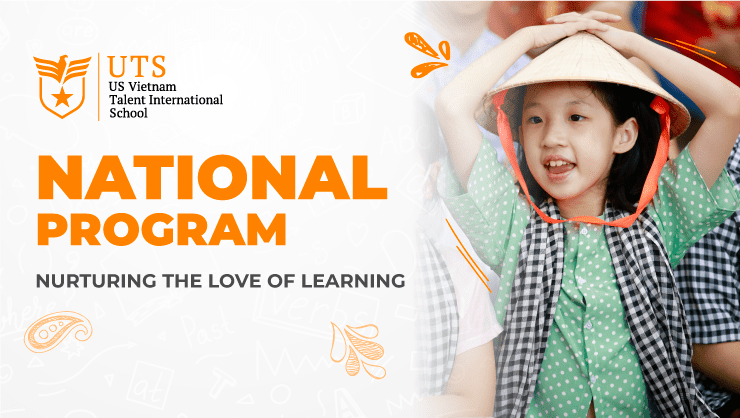
Nurturing a love of Learning with the National Program at UTS
National Program at UTS: The National Program is a standard program under the new curriculum framework of the Ministry of Education and Training for all levels of education. At UTS, this program is more optimized and focused on practice to help students master general knowledge, effectively apply learned knowledge and skills to life. Besides, UTS likewise equip students with essential knowledge and skills so that can choose appropriate future careers and lifelong learning as well as understand how to build and grow in harmony with social relationships, freely express oneself and enrich spiritual life. Teaching Methods UTS students have access to the optimized National High School program through many methods: project-based class, inquiry based class, reversed class, etc. These are modern methods which are studied to bring higher efficiency than traditional learning methods. As a result, students acquire knowledge more actively, arouse their passion for learning and discovery. Moreover, students will more effectively grasp the focus of each subject. In addition, several UTS learning projects connect multiple subjects, giving students not only the opportunity to study each subject individually, but also to link interdisciplinary knowledge and apply it in practice. UTS operates concurrently the National High School Program with the International Program and the Growing Talent Program; it provides students with lessons associated with traditional Vietnamese values, assists them in appreciating and promoting traditional features in the community, and encourages students to become global citizens who are always prepared for future changes. Let’s take a look at the outstanding classes in the last 2021-2022 school year! 1. “Ao dai of Vietnamese” Project – Vietnamese Class – Grade 5 This is a project about Vietnamese traditional ao dai in Vietnamese class 5 by Ms. Bich Quy. By practical application to theory, they temporarily left the familiar school uniform and instead put
News & Events
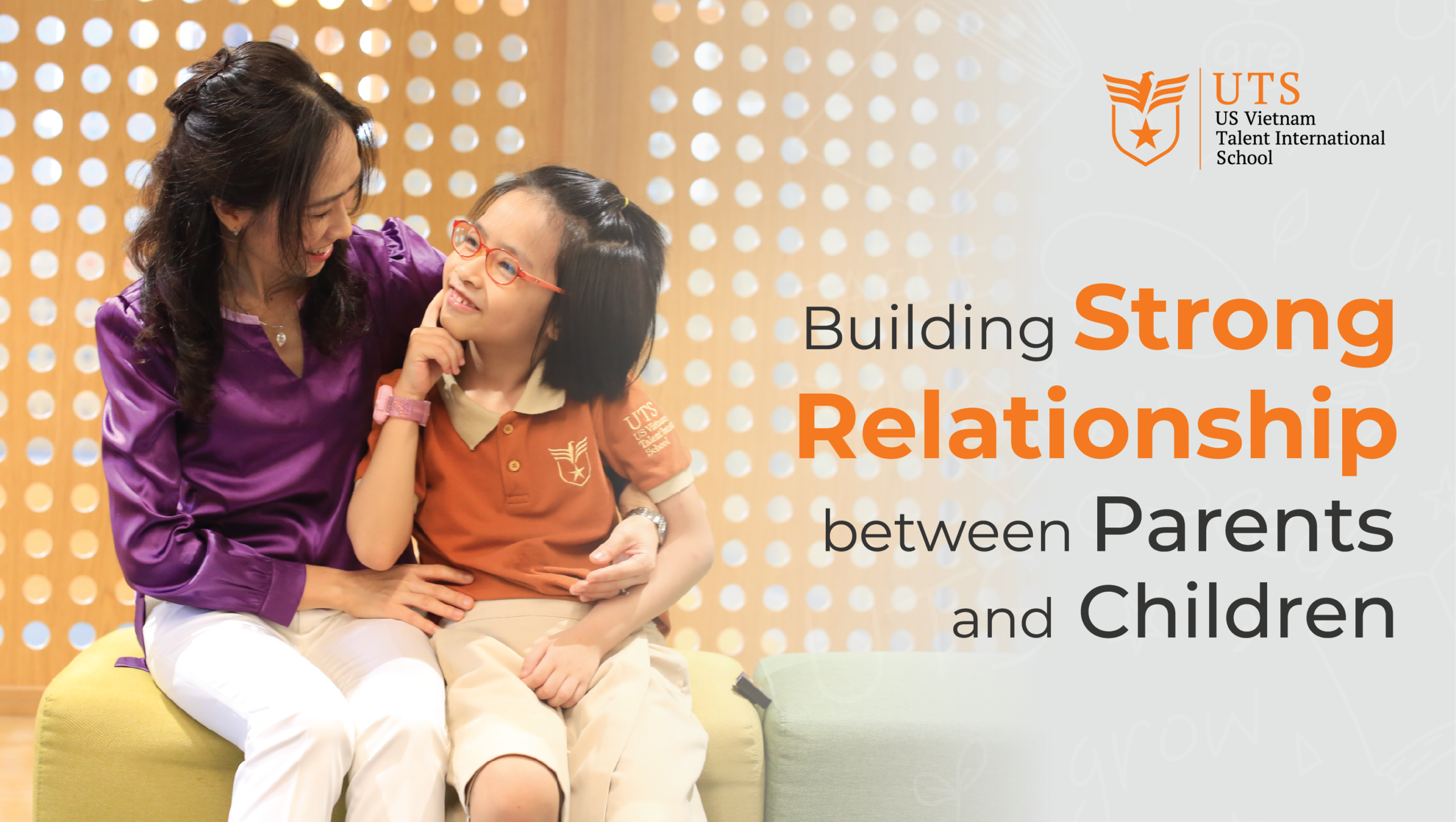
Do you know? How Does A Sentimental Bond Between Parents And Children Work?
There is always a natural bond that is made up of the family love between parents and children. Parents tolerate and sympathize with their kids and their children are grateful for growing up in their parents’ warm embrace every single day. Authentic bonds can be affected by several factors and have a significant impact on children’s maturity, especially in the mental health aspect. According to parents’ perspective, what is the root cause of making such a generation gap? UTS had comprised the common reasons through accompanying and talking with families about their daily lives. 1. Factors affecting the relationship between parents and children An affectionate and sentimental attachment between parents and children is formed from 3 leading elements: Communication Communication between parents and children plays a key role in developing parent-child intimacy. Besides, it is beneficial that the root principle is to listen to their children’s confidence. In fact, effective communication is straightforward, stemming from the way parents interact with their children. Children will find it sympathetic when parents are eager to listen to their thoughts and give advice with a compassionate listening attitude. Just take a closer look at a scenario when being asked by parents after going home from school: “Have you done your homework?” rather than “Did you enjoy your school today?”. Children’s innermost feelings will immediately start wondering: “My parents just care about my homework but my emotion!”. They are not able to express their inner true thoughts confidently which gradually weakens the parent-child communication bond because of 2 different standpoints. Caring in child rearing This factor will form the incentives and encouragement of what children do in order to help parents express sincere feelings and respect their children’s decisions. Meanwhile, it also signifies a companion by giving children proper advice and solutions when they encounter
- 56
- 57