
News

News & Events
UTS Family Sport Day 2026 “Eagles Run, Eagles Go Beyond” officially returns
The annual UTS Family Sport Day 2026 will bring a vibrant celebration where families can run together and connect with the UTS community.
News & Events
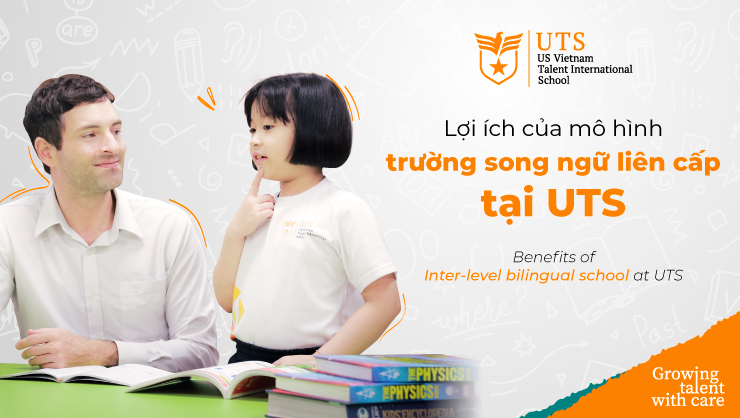
Benefits of inter-level bilingual school at UTS
UTS is an inter-level bilingual school which integrates the optimized MOET program with the modern International program. With the education programs ranging from Primary, Middle School to High School, we bring numerous benefits to the development of our little “talents”. 1. THE CONSISTENT AND COMPREHENSIVE DEVELOPMENT PATH The first benefit for students is the consistent and comprehensive development path. With the same education method applied from Grade 1 to Grade 12, students will not have to face the confusion at the transition stage or the difficulty to adapt to the new learning environment. This is an opportunity for students to promote their confidence and high learning spirit to discover their outstanding talents. 2. CONVENIENCE Convenience is another benefit of inter-level school, especially for families who have more than 2 children. Brothers and sisters in a family can study and explore the world at the same school. From that point, parents can save the commuting time and control family finance. 3. THE INCREASE OF LEARNING OPPORTUNITIES One more benefit of the inter-level bilingual school is the increase of learning opportunities. With lots of students at different ages, the process of exchanging and guiding lessons back and forth among the students becomes easier. In addition, the inter-level school also facilitates students to discover knowledge of a higher level with the enthusiastic support from dedicated teachers. In order for these activities to take place smoothly, UTS’ teachers and staffs always prove the spirit of “growing talents with care”. The final aim of UTS is equipping students with necessary skills to confidently conquer important milestones and contribute to the society.
News & Events
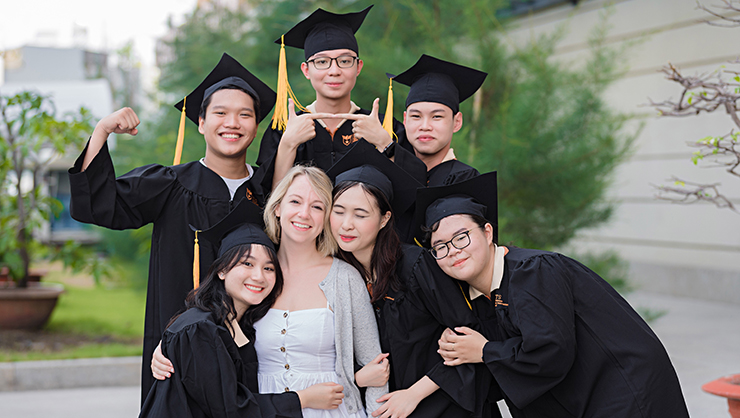
Saving sweet memories with UTS-ers
The 2020-2021 school year marks a milestone for UTS’ Grade 5, 9 & 12 students in completing their education levels. For Grade 5 & 9, there are many interesting knowledge and experience waiting for you at a higher education level at UTS. For Grade 12, now is the time to demonstrate your confidence and bravery when officially going into the big sea and conquer new challenges in lives. Although the journey ahead will bring countless opportunities as well as obstacles, don’t forget that you are all members of UTS family – we are strong, talented and full of enthusiasm. Remember that we are always here, ready to help and welcome you with open arms! * These moments have been saved before the serious situation of the pandemic *
News & Events
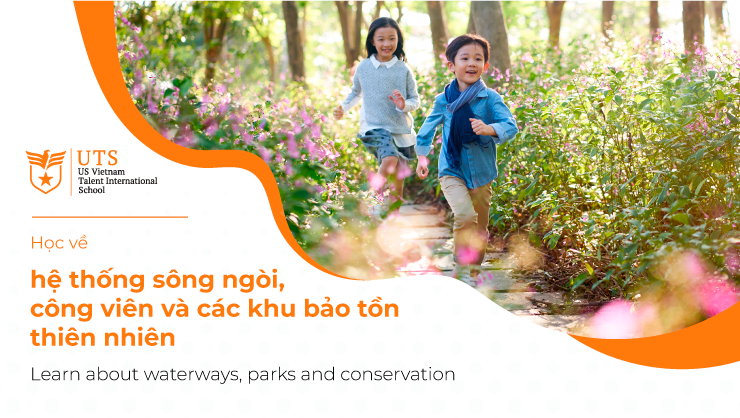
Accompanying children in the environmental protection journey
June 5 is designated by the United Nations as World Environment Day. This is an opportunity for us to raise awareness for the community and take active actions to protect our environment. Environmental protection is a long journey which cannot be done within one or two days. It requires us to have responsibility, patience and especially understanding so that we can act properly to the surrounding environment. How can parents help children understand more about environmental protection and encourage them to take good actions towards sustainability? Let’s have a look at following suggestions from the US Environmental organization (Environment America). 1. LEARN ABOUT PLANTS – Explore interesting information about the Earth, plants and animals and their current status through books, television and Youtube videos; – The whole family can create beautìul pictures with dried leaves and flowers; – Take advantage of the balcony (for high-rise buildings and apartments) and the open space (for ordinary houses) to plant a small garden of lovely flowers and trees; – Play games to learn the origin of the foods we eat every day and how they are cultivated and harvested. 2. LEARN ABOUT WATERWAYS, PARKS AND CONSERVATION The water, air and land environments are factors that need to be nurtured and preserved. Parents and childredn can research on many issues such as: – Learn about the system of rivers, lakes, canals and canals in the neighborhood; – Learn about water pollution and some ways to reduce it; – Explore the role of parks, forests and tree planting in reducing air pollution and flooding; – Learn about the role of natural reservation; – Learn about types of soil in nature and their current condition. 3. LEARN ABOUT WAYS TO REDUCE WASTE Waste is one of the most urgent problems that need to be solved