
News & Events

News & Events
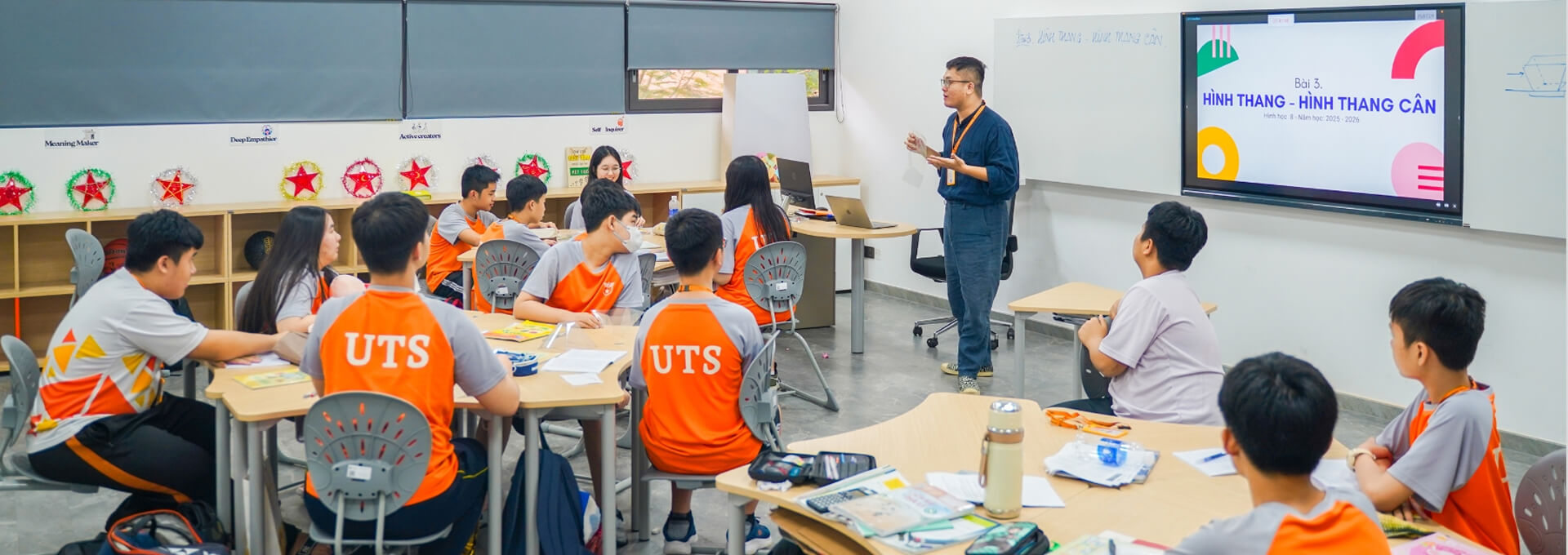
UTS Family Sport Day 2026 “Eagles Run, Eagles Go Beyond” officially returns
The annual UTS Family Sport Day 2026 will bring a vibrant celebration where families can run together and connect with the UTS community.
News & Events
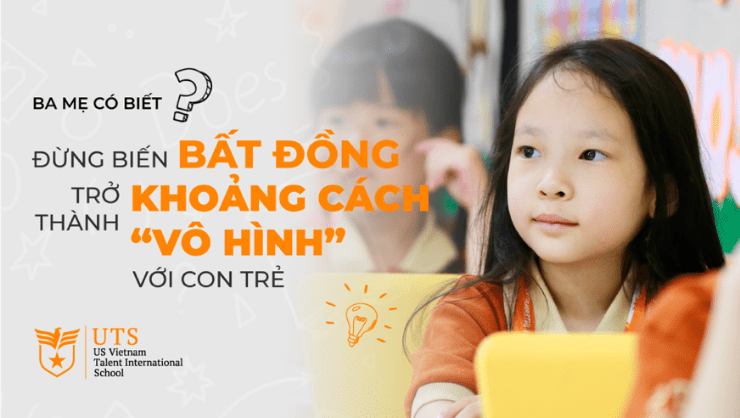
Do Parents Know? Don’t Turn Disagreements Into The “Invisible” Distance With Children
Any close relationship may face difficulties from time to time. Especially between parents and children, with age differences and a variety of other objective and subjective factors, unpleasant conflicts or disagreements might arise accidentally. In the position of parents, parents have a significant obligation to educate your children grasp the difference between good and bad, right and wrong, and other key ethical principles to prepare for life. However, among youngsters, particularly in adolescence, the desire to be acknowledged as self-sufficient and mature, as well as the urge to prove themselves, becomes incredibly great. Parents, on the other hand, may have your own set of rules and expectations for your children. As a result, many families must have experienced many unhappy times between parents and children when educating and directing your children. Here are some suggestions to assist parents in reducing and improving this issue: 1. Neither the parent nor the child must be the “winner” of an arguments First, parents must equip yourselves with a more relaxed temperament and perspective, understanding that family conflict is unavoidable. Because life may be so hectic at times, parents may not always be able to pay attention, care for, and understand your children’s signs. Alternatively, there may be occasions when parents struggle to control your negative emotions to your child’s misbehaving. Instead of worrying excessively or attempting to be severe, parents might opt to respond in a more positive manner. In truth, the most important thing in a debate is to be heard and understood, not to be the “winner”. When conflicts arise, parents can practice restraining your anger and saving your arguments as well as things to say until a more opportune moment. Our ultimate objective is for our children to have a better understanding of the situation, so pick a moment and
News & Events
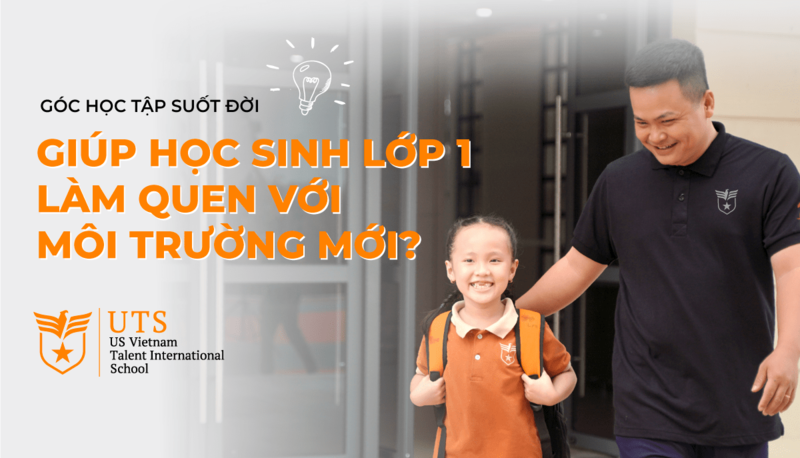
LIFELONG LEARNING HUB | HOW DO GRADE 1 STUDENTS ADAPT TO A NEW ENVIRONMENT?
What worries parents the most when your child moves to the Primary school environment, having to adapt to many new things? Recently UTS have received many questions about how to help Grade 1 students adapt to new environments since they have to be exposed to completely new environment, new teachers, new friends as well as learning method comparing to their Preschool’s. It is easy to understand that anxiety of parents, Grade 1 is also the first year of your child’s school year. Moreover, due to the Covid-19 pandemic, our children had an online study semester at home. Although children have to study and communicate with friends through small screens, parents can still observe your children and they also study at home – an environment that is so familiar to them. In just a few days, the Grade 1 Students will go to school, and when they have to adapt themselves with the more serious academic environment, there will be no more parents or teachers as pampered as in Preschool. Understanding these concerns, UTS will help parents find the complete answer to the above question. Suitable environment Entering a new school after leaving the dear Preschool, our children will surely be surprised. When they were in preschool, the space surrounding them was colorful classrooms, visual supplies and a play area. In order to help them feel the closeness, love and less initial surprises, the preparation of the classroom before picking up Students to school is always prioritized by UTS and completed early. UTS teachers have devoted time and enthusiasm to preparing a environment to welcome Grade 1 Students with the hope of bringing a lively learning, living and attracting space associated with the knowledge that they will learn as letters, numbers, geometry, etc. This way of arranging classroom space will
News & Events
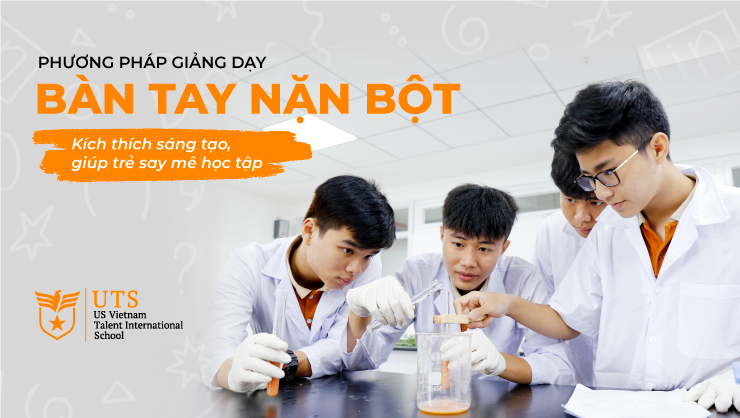
“Hands-on” methodology – Excite creativity and help children enjoy learning
In recent years, the education sector in general and schools have made great efforts to reform the quality of teaching and learning in the natural sciences. With the teaching philosophy of putting Students at the Center”, the US Vietnam Talent International School has applied the method “Hands-on” at the high school level to help students be independent, creative, take initativesinitiatives and solve problems. Besides, this method also helps teachers improve the quality of teaching. “Hands-on” methodology is the way the teacher organizes for students to self-study to find solutions to the knowledge in the curriculum through proposing, discussing, and performing experiments. The steps to organizing classes according to this method include: Stage 1: The starting situation and the question raises the issue. Teachers will proactively set a starting or questionable situation as a starting point to the lesson. The foreboding circumstances are brief, close to students and practice making questions raises the issue at the same time. Problem question which is the big question of the lesson itself (or module of knowledges that students will be taught) need to ensure suitable to students’ level, arouse curiosity and researching interest of the students to equip them with studious psych sphere before perceiving sciolism. Teachers should use open questions instead of closed ones (Yes-No question) in terms of problem questions. It also must meet all the requirements that were mentioned before, so that the teaching scheme of the teachers will be more successful. Stage 2: Expressing the beginning opinions of students In this stage, teachers will encourage the students to express thoughts and raise their awareness before learning new things. To raise the starting conception from the students, teachers can request their students to remind the previous lessons that alike with knowledge of the current lesson. When requesting students to express the started awareness, students can